
‘Star Wars: Visions Presents – The Ninth Jedi’ Review: These Lightsabers Have Too Many Feelings
‘The Ninth Jedi’ has the bones of a great Star Wars story: a fascinating new mythology, a compelling heroine, and an alternate take on the sequel trilogy that actually understands what made that era of the franchise so frustrating.

While this may be attributed either directly to Lucasfilm or even the studios outside that have been commissioned to work on Star Wars: Visions, one thing that has proven true about Disney’s management of Star Wars is the consistency of their approach to animation. While live-action Star Wars has had a number of highs and lows, for every Andor and Mandalorian, there have been those that have been mediocre to downright bad. Animation, on the other hand, has continued to give Star Wars creative leeway.
This is essentially why the three seasons of Star Wars: Visions were so thrilling. The format meant that creators from various backgrounds and animated styles could play around with the basic elements of Star Wars and create anything from them. Some of the episodes were visually stunning, some were bizarre, some were emotionally harrowing, and others were hilariously absurd. However, most importantly, the episodes conveyed the impression that the filmmakers were playing around with the mythos rather than simply preserving it.
Star Wars: Visions Presents – The Ninth Jedi seems poised to carry on that tradition at first. And in all fairness, it does have some genuinely interesting concepts. It just pushes those concepts way past where they could naturally go. What could have been a very good stand-alone anime film ends up becoming an eight-part miniseries that often feels long and boring.
The biggest problem is that The Ninth Jedi takes too long to become interesting.
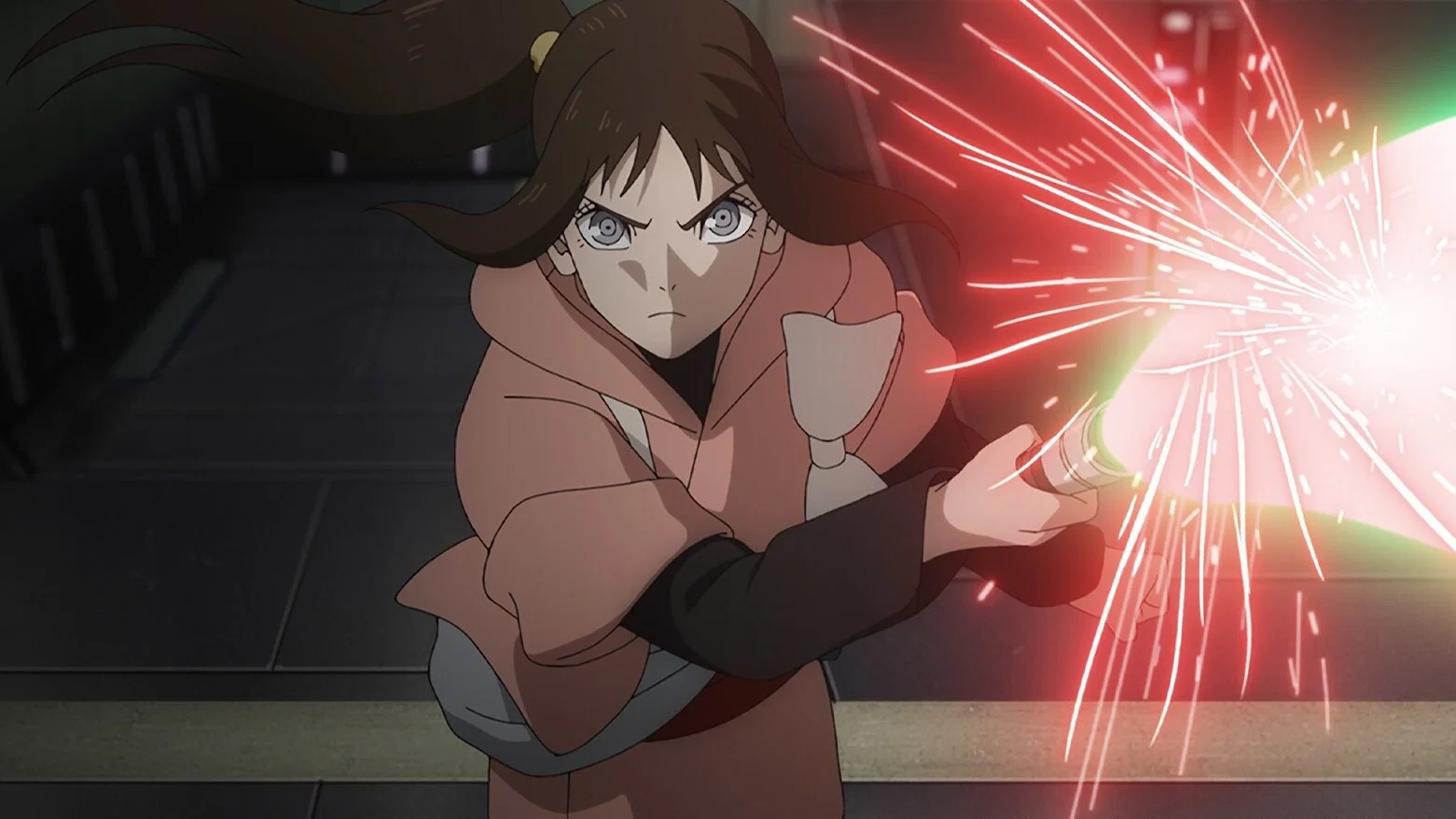
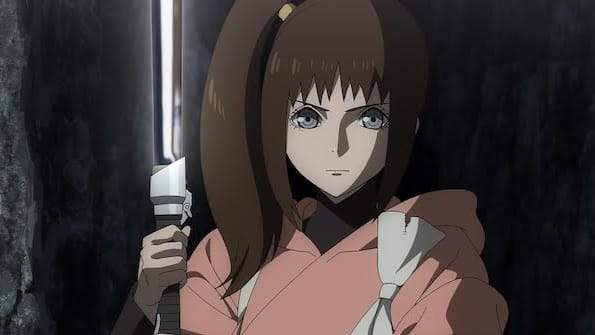
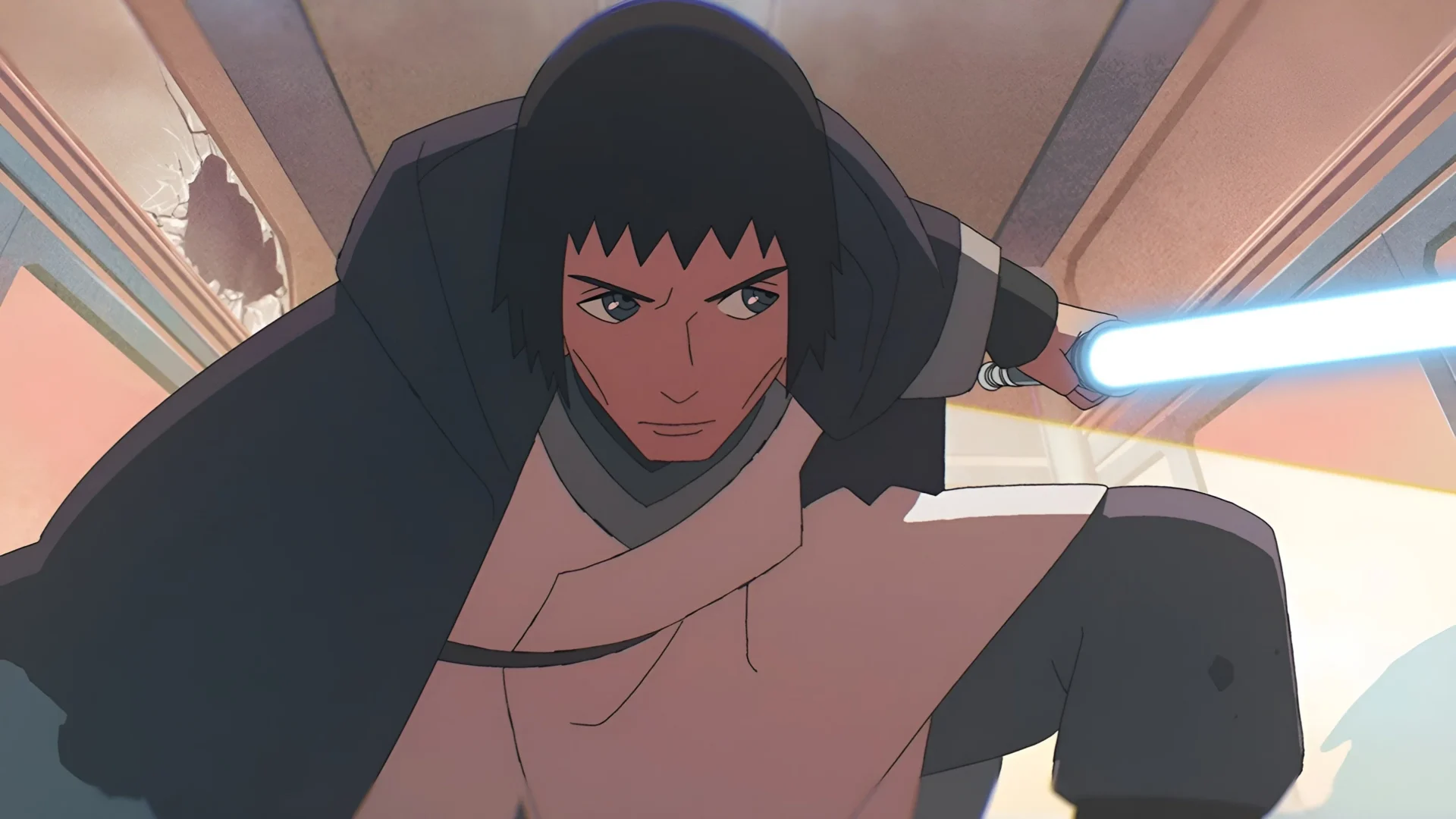
The original Ninth Jedi episodes, which originated from the ideas of Kenji Kamiyama (The Lord of the Rings: The War of the Rohirrim, Blade Runner: Black Lotus) and Tetsuya Nishio, offered a delightful premise to work with. In a world where the Jedi and Sith have pretty much disappeared, the lightsaber itself becomes an artifact of mystery. Kara, the daughter of sabersmith Zhima, finds herself caught up in a conflict between the Jedi Master Juro and some people who claim to be users of the Force. The idea of lightsabers becoming almost archaeological artifacts was compelling enough on its own—which took something instantly recognizable from Star Wars and reframed it through a different cultural and narrative lens.
The longer miniseries expands that premise considerably. At its best, it becomes an interrogation of what Star Wars actually means when you strip away its familiar institutions.
The Jedi is not only the Jedi anymore. The Sith is not only the Sith anymore. Even the lightsaber itself is a symbol that can mean different things depending on who wields it, what the wielder believes in, and how they understands the Force. Similarly, the idea of kyber crystals changes everything about lightsabers, making them a tool almost responsive to the Force wielded within it.
That is a terrific idea in theory.
I just don’t think the series always knows what to do with it.
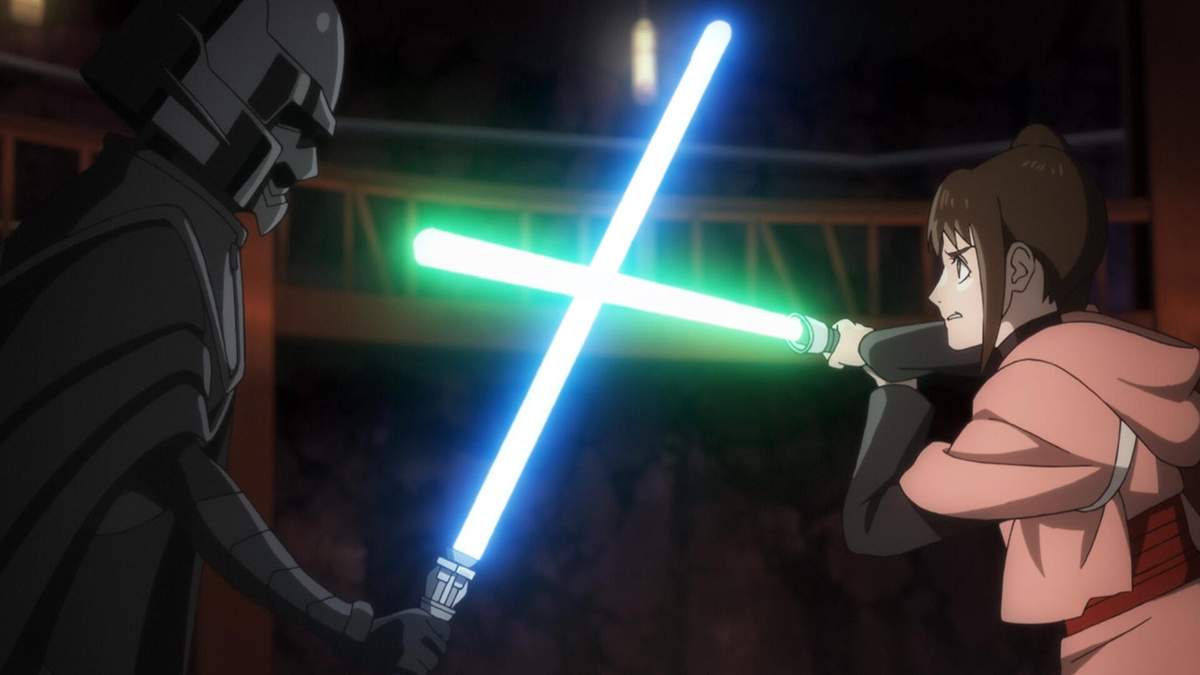
While the decision to have lightsaber colors depend on the connection between the user and the Force can be an interesting one visually, the way it has been implemented at times makes them seem more like mood rings than sacred weapons. The lightsaber itself has held great symbolism in Star Wars throughout its history. The color of the lightsaber itself has been capable of telling us about the identity, allegiance, history or philosophy behind its owner, but The Ninth Jedi takes things to a very literal place.
It is visually striking, but dramatically it can feel arbitrary.
There is also a problem with the dialogue which is way too bloated in the series. There are lots of explanations of the mythology, politics, history of the Jedi, of the Force, of the lightsabers and ideological disputes. Some of this information is needed but the series keeps on telling us things which should be conveyed through action which contributes significantly to the sluggishness.
The series consequently touches upon ideas that have always existed within Star Wars but rarely receive this particular treatment. What happens when good and evil stop being useful categories? What happens when the Jedi become less interested in preserving their philosophy and more interested in preserving their institutional identity? What happens when the Force becomes something that can be interpreted, commodified, or manipulated?
The Ninth Jedi is particularly interested in the idea of competition. The Jedi and the Sith are no longer just rival religious sects. They are taking on new identities within a society that is preoccupied with power, stratification, ability, and order. The show is obsessed with the notion that when you take empathy out of the system, the noble ideals can themselves be used for manipulation. This is where the show proves unexpectedly relevant in relation to the greater Star Wars universe. As The Ninth Jedi is, in many ways, the alternate-universe continuation of the sequel trilogy.
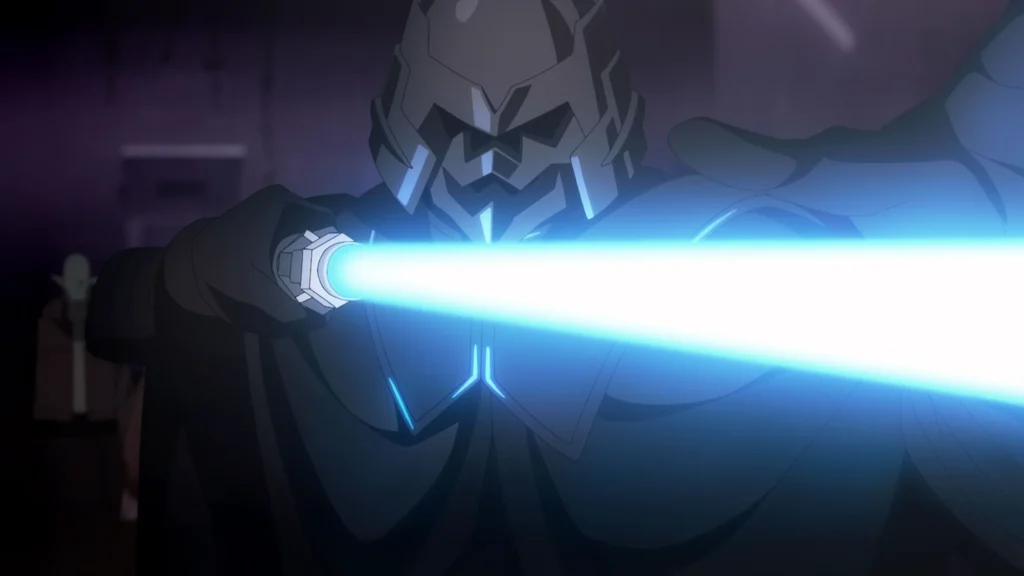
As the main villain, Nawaam seems to be a twisted version of what the sequel trilogy tried to make the protagonist of its saga. Nawaam is young, exceptionally skilled, ambitious, and intent on breaking down all the outdated concepts of good and evil. Nawaam’s belief is that the old system has not worked, and there is a need for something that is more organized to take its place. The conflict between him and Juro, is not just that of a simple Sith versus a Jedi but rather a generation gap of the myth against its destruction and rebuilding.
Kara exists on the other side of that conflict. The connection between Rey and Kara cannot be overlooked, yet The Ninth Jedi uses Kara far more effectively than the sequel trilogy used Rey on occasions. Kara is strong but does not have her strength as the full essence of who she is as a character. The show provides her with questions, backstory, control, and emotions. Her relationship with her father and her uncertainty about what she is capable of matters. Most importantly, Kara actually has to become someone. That distinction is crucial.
Another issue with Rey was the fact that her great potential became an easy way of saying she was competent. She was able to do anything and everything that the story required her to do. However, The Ninth Jedi does not take the same approach. The show provides more background and experiences for Kara’s great potential and allows her actions to define her character—which makes her journey considerably more satisfying.
Unfortunately, the series around her is not always as compelling as she is. It’s the pacing which proves to be the greatest hurdle. The Visions format was well aware of the virtue of being concise. It can take you through the introduction, development, and completion of a concept in just one short. But The Ninth Jedi keeps layering a story that does not always need all of those layers. What starts off as a mystery soon turns into a lesson on mythology, politics, philosophies of the Jedi Order, and finally an action adventure.
None of the above elements are necessarily negative in themselves; the issue arises due to their competition for space.
The series tries to be enigmatic, philosophically minded, character-focused, mythic, and spectacular all at the same time. Some episodes succeed in this, while others give off the impression of having been put together using material that could have fit two episodes into eight.
Thankfully, when The Ninth Jedi finally embraces its identity as a Star Wars story, it can be fantastic.
The space battles actually manage to capture some feeling of scale that just isn’t there in the other parts of the series. The Force manages to remain appropriately mysterious, and the lightsaber fight scenes are always well staged. There is a level of animation elegance in the show that definitely seems very Japanese.
The Ninth Jedi is not the groundbreaking retelling of Star Wars that I thought it would be; however, it remains an intriguing reflection of the mythology of the franchise. Beneath the layers of expository dialogue lies a compelling tale that explores the nature of Jedi, the Force, good and evil, and the systems that we construct surrounding those concepts.
Star Wars: Visions Presents – The Ninth Jedi is directed by Shunsuke Tada featuring the voices of Chinatsu Akasaki, Tetsuo Kanao, Hiromu Mineta, Hinata Tadokoro, Cho, Shin-ichiro Miki, Hiroshi Naka, Akio Otsuka, and Nao Omori. Star Wars: Visions Presents – The Ninth Jedi is now streaming on Disney+.
Thank you for reading. If you liked this Star Wars: Visions Presents – The Ninth Jedi review, check out more reviews here at Feature First!