
‘Hope’ Review: A Monster Movie Buried Under Its Own Spectacle
South Korea’s most expensive film features monsters that looked like straight out of a video-game cutscene and becomes less interesting the more it explains itself—as if Stranger Things was directed by Michael Bay

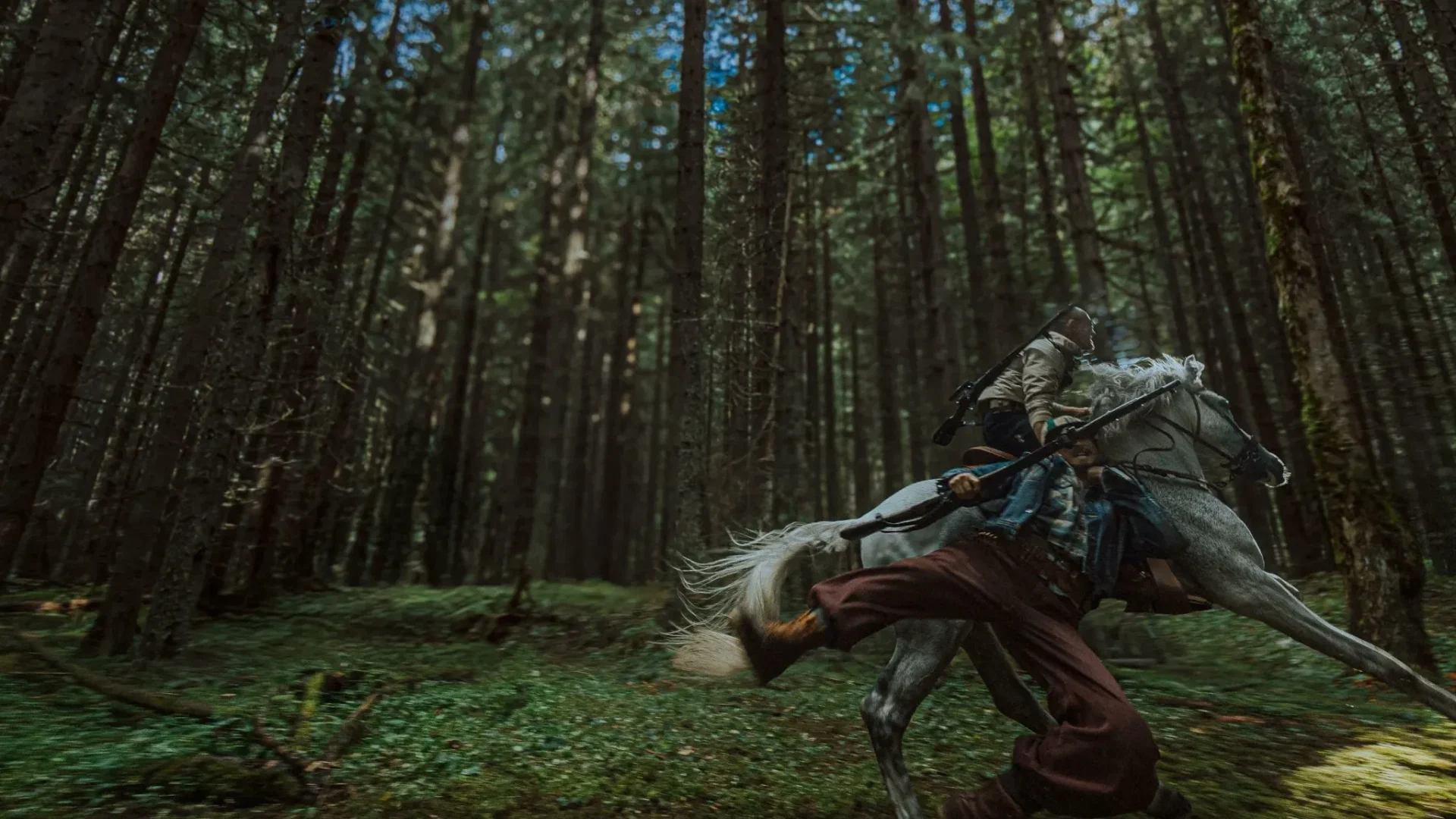
I went into Hope with pretty high expectations. Beyond being directed by Na Hong-jin, whose films have a particular talent for turning ordinary spaces into places of dread, it is also the most expensive film ever made in South Korea. That kind of scale naturally comes with certain expectations. Set around the narrow outskirts of Hope Harbor, the film initially presents itself as a strange and frightening monster mystery.
This Hope review contains spoilers.
The first act is easily the strongest part of the film; the mystery and thrill of something out there killing people and just the thought that nobody knows exactly what they are up against, is terrifying. A lot of the action scenes in the first act of the film are undoubtedly some of the most exhilarating scenes that I have seen this year. The kind of breathless sequence where you get the feeling that you are running alongside with the characters instead of just watching them run away and being chased.
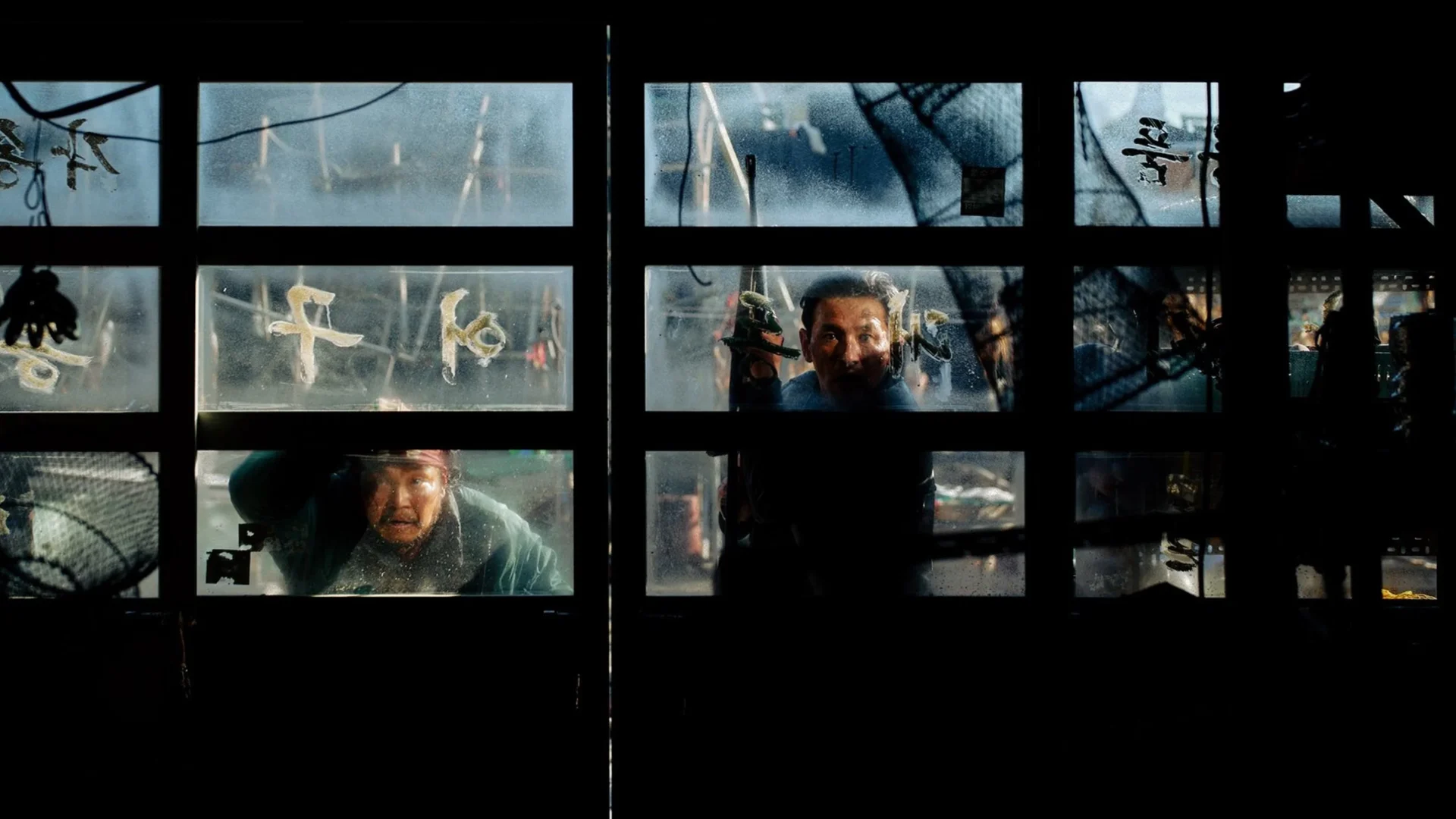
Na Hong-jin also keeps the revelation of the monster slow and well-controlled, and it pays off handsomely. These monsters are scarier when they are not fully visible. A quick look at something that moves in the background, the results of the assault, people running frantically through narrow areas—all of these situations evoke terror which unfortunately didn’t recapture in the later part of the movie and eventually abandons much of what made that first act work.
The moment the monsters are revealed more clearly and become a major presence, the movie takes a hard turn from mysterious monster thriller into full-blown science fiction a la Aliens franchise. At some point, I couldn’t stop thinking that Hope looks like if Stranger Things were directed by Michael Bay. You have the small-town mystery, strange alien monsters, and characters stumbling into something much bigger than themselves.
But instead of the eerie restraint and Spielbergian wonder of Stranger Things, Hope increasingly wants explosions, giant set pieces, screaming characters, massive visual effects, and the kind of maximalist spectacle associated with Bay. It is an oddly appropriate comparison because the movie seems caught between two identities: a creepy creature mystery and an expensive sci-fi blockbuster. Unfortunately, it never completely figures out how to make those two sides work together.
One of my biggest issues in this film is how it becomes increasingly annoying on its characters surviving situations where, realistically, they should be dead. The amount of plot armor becomes ridiculous, especially when the film repeatedly places its characters in supposedly impossible situations only to find increasingly convenient ways to keep them alive.
It was especially frustrating when it came to Zo In-sung’s character. Zo In-sung is one of my favorite Korean actors, but this may have been the first time I’ve watched one of his films where I wished for his character’s death. It wasn’t that I hated his role, but the way he was written started to become a big problem for creating tension in the film. At some point, I have wished for Hope to show that no one was safe.
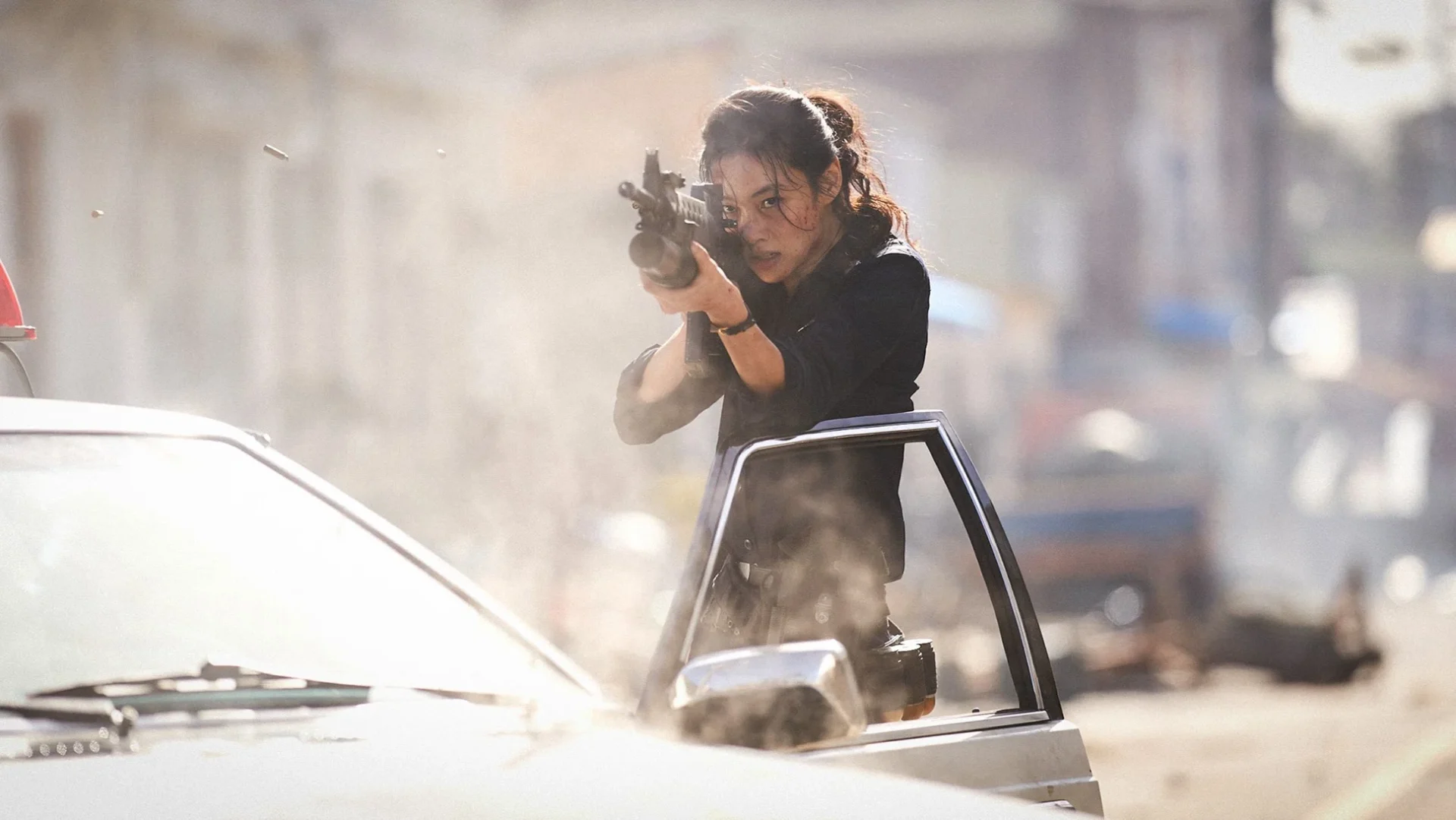
It seems odd that Na Hong-jin had such a reservation when his earlier films were marked by a certain relentlessness in seeing things spin out of control. The Chaser, The Yellow Sea, and The Wailing know how to create vulnerability in their characters. It seems that anything could go very wrong at any time. Hope sometimes tries to capture the same mood, but the increasingly commercial nature of its story-telling approach makes it far more tame than I had anticipated.
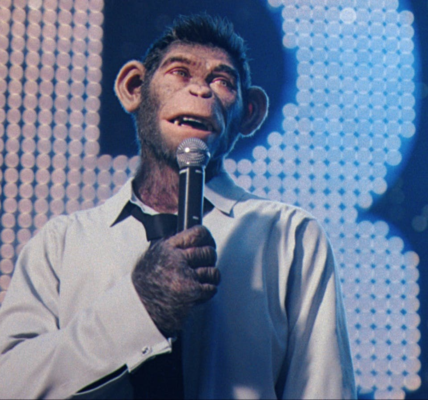
Another group of actors I found myself wondering about was Alicia Vikander, Taylor Russel, and Michael Fassbender’s roles in this film. Their casting immediately intrigued me with so many questions—Who are they playing, scientists? Where do they fit into this monster-setting story? What are they, Western people, doing in Korea? Unfortunately, the eventual answer left me more disappointed than intrigued. Realizing their roles as the monsters ultimately feel unsatisfying considering that their characters also look like sentient beings pulled straight out of a video-game cutscene. Instead of adding another layer to the mystery, they contribute to the movie’s increasingly artificial feeling.
And that’s probably my biggest problem with Hope: it becomes less interesting the more it explains itself.
I did not like the idea of humanizing the monsters at all. This does not mean that there is anything wrong about making these monsters have some motivations or emotions, but the film fails to make this process justified. It would have been better to have them as these crazy, mindless, wreaking havoc monsters compared to a monster we are forced to sympathize upon.
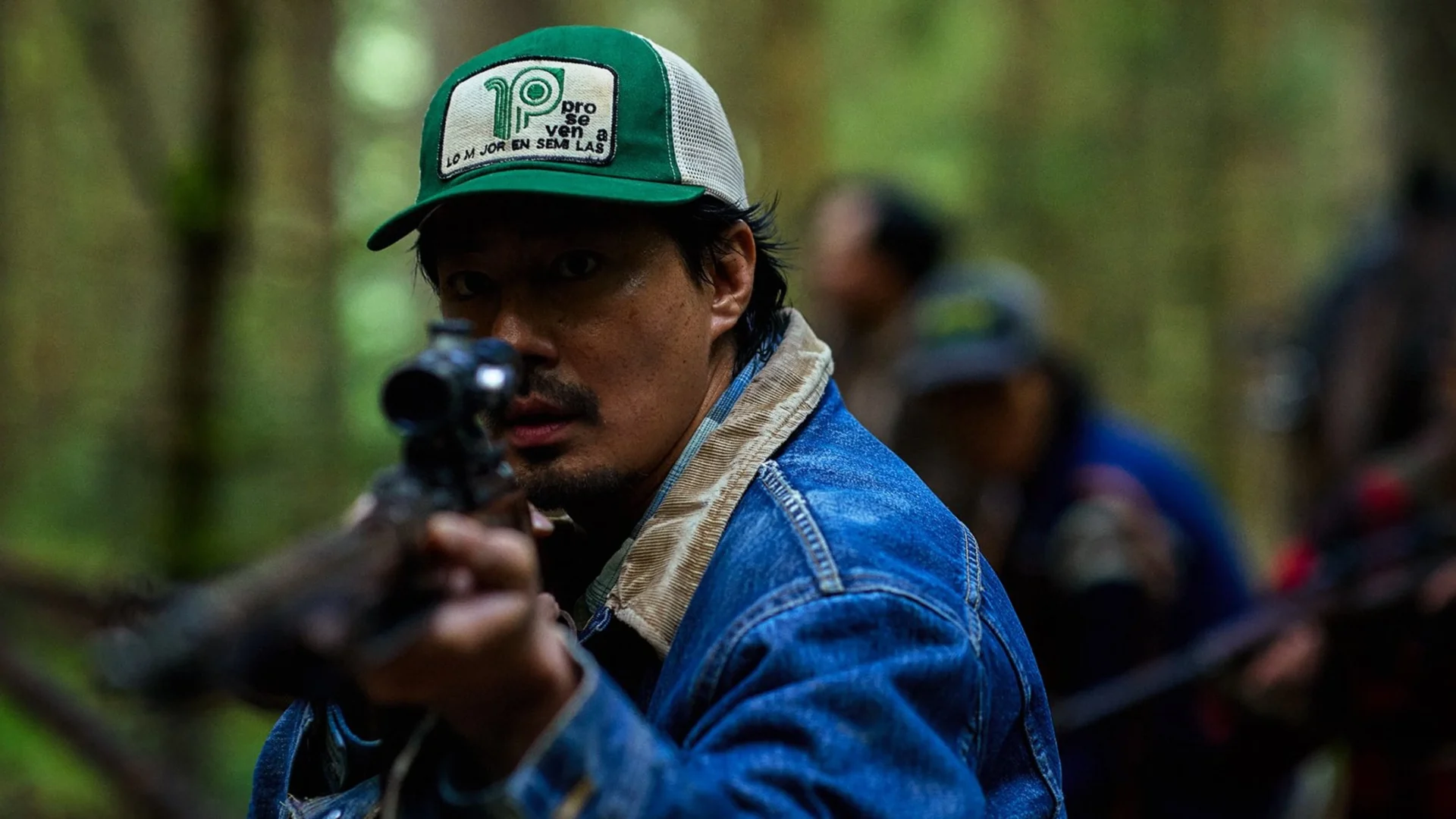
If these monsters were planned to be humanized in the first place, Na Hong-jin should’ve set up their motivations earlier in the film. Instead, much of the information we need arrives frustratingly late, with the larger picture of their motivations becoming clear only toward the literal final moments. And by then, I had already stopped caring.
It also doesn’t help that this reveal is mostly geared towards creating a sequel for the movie. Rather than giving us some kind of conclusive end to what we have been seeing throughout the film. I am okay with leaving things open ended, but there is a difference between leaving something mysterious and simply withholding information because you want to save it for later.
The film’s technical accomplishments are undeniable. This is clearly an expensive production— featuring sequences where the scale, visual effects, production design, and action choreography are impressive. Na Hong-jin still knows how to compose impressive shots and create a sense of physical danger. There are scenes in the movie that are genuinely exhilarating, particularly during the film’s earlier sequences when the environments feel hostile and the creatures remain mostly unseen. But spectacle can only carry a movie so far. Once the mystery disappears, there isn’t enough underneath to replace it.
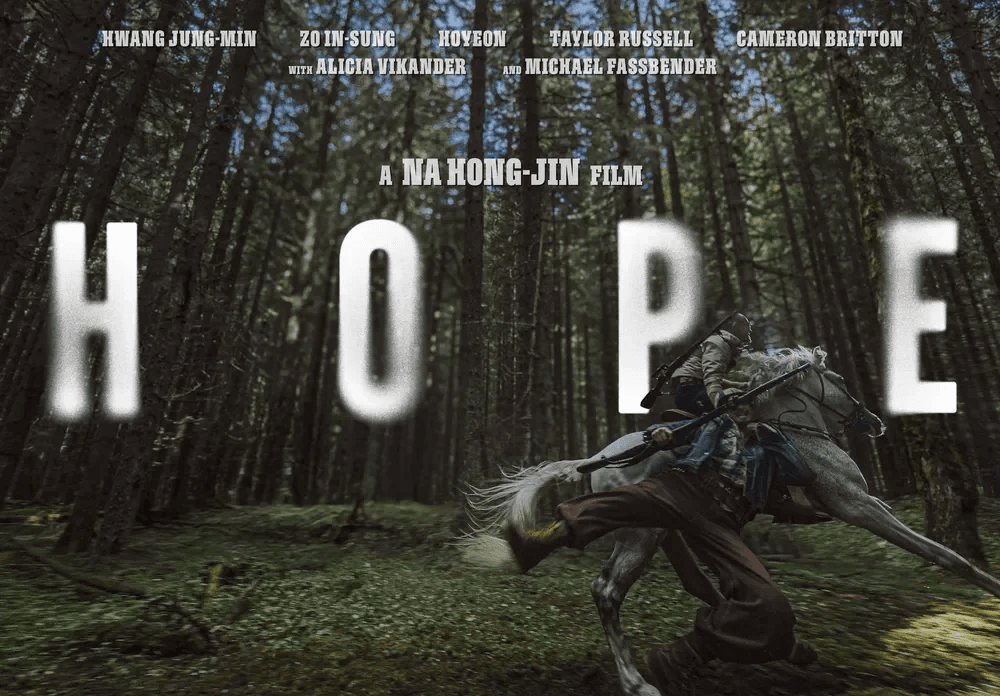
Hope is written and directed by Na Hong-jin. The film stars Hwang Jung-min, Zo In-sung, Hoyeon, Alicia Vikander, Michael Fassbender, Taylor Russell, and more.
Thank you for reading. If you liked this Hope review, check out more reviews here at Feature First!