

Elle Fanning Deserves To Win The Oscar For Her Overlooked, Unique Role As The Outsider In ‘Sentimental Value’
Elle Fanning has steadily climbed towards her first Oscar nomination after channelling several great performances over the years with her latest in Sentimental Value arguably being her best and most challenging role yet.


As award season progresses, more announcements are made on who got nominated or left out, snubbed even. But one particular actor I feel that isn’t quite receiving the same praise as the rest of her cast members is Elle Fanning in Sentimental Value. Sure enough, all 4 main actors (Renate Reinsve, Stellan Skarsgård and Inga Ibsdotter Lilleaas) have been given praise by critics and casual viewers alike, but there seems to be a growing perception, or divide rather, that Elle Fanning is the least memorable of the cast, or not quite as remarkable as the others.
The industry also seems to be ignoring her as she unfortunately blanked in the Screen Actors Guild/The Actors Awards as well as the BAFTA longlist, which seemingly dented her chances of a potential Oscar nomination, only to somehow surprise with a deserving inclusion. What could have been the only actor of a terrific cast to not be in contention by the end of this season now seems to have a flicker of hope in her favor.
I’d argue that Elle Fanning has long deserved this level of recognition, not just for her incredible body of work, credited in 50 feature films and counting at such a young age of 27 while producing 2 films so far. It is clear she is an industry veteran, thrusted into the spotlight as a child alongside her more known and talented sister Dakota. But some would say she has been unfortunately living in her older sister’s shadow, not exactly her fault but it’s unfortunately just the nature of Dakota having a quicker rise to fame with earlier recognition as an actor. Now, in Norwegian director Joachim Trier’s latest feature Sentimental Value, a small indie production, Elle finds herself as a bit of an outsider. Being the only American of the main cast with fellow Swedish star Stellan Skarsgård and Norwegian duo Renate Reinsve and Inga Ibsdotter Lilleeaas, Fanning is in a remarkable position of possibly being the most popular yet the most misunderstood performer since the release of the film.
A fish out of water that seemed to have no business being in this Scandinavian indie movie, It only fuels this perception that Elle is much less than the rest of the cast, but that couldn’t be further from the truth. In fact, Sentimental Value as a film wouldn’t be so great and work nearly as well without Elle’s astonishing role that so confidently walks the tightrope of both acting and non-acting, in perhaps the most meta part of the film. So here’s why Elle Fanning deserved to be nominated for the Oscars and, perhaps even win.
In Joachim Trier’s Sentimental Value, Elle Fanning takes on the character of Rachel Kemp. A Hollywood actress who seems to be successful, yet it’s immediately clear to see that she is missing something. This is felt when she watches director Gustav Borg’s film (played by Stellan Skarsgård) and is left in tears by the end of the experience. There’s a moment where Elle manages to effectively capture a person who is so struck by what they saw on screen that they seem broken in silence. It’s an instantly relatable moment for anyone who goes to the theatres and watches a film that changes their life. You are placed in an extreme moment of vulnerability and speechlessness, thus beginning Rachel’s new journey to self-discovery. She greets Gustav and thanks him for such a beautiful film. They even decide to hang out for the evening at the beach, enjoying the breeze and the clear scenery. This is where the magic starts happening for Rachel and Gustav, as you instantly learn so much about their characters through this interaction.
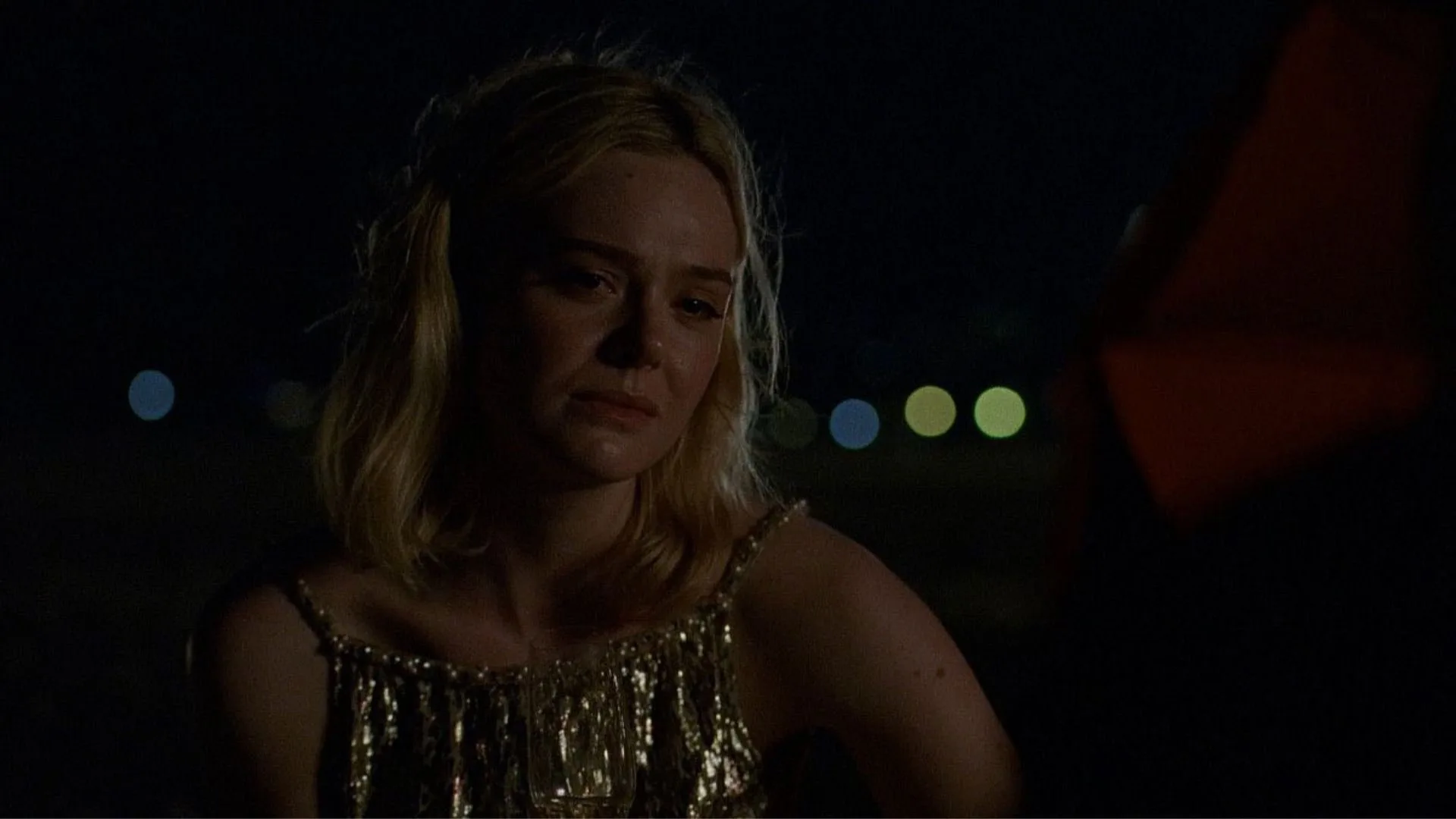
When they sit down and contemplate life, Elle’s aimless Rachel expresses her admiration towards Gustav. Wishing that she could make films like him, highlighting how he gave her a unique experience that she never had before, which brings out the biggest teary-eyed smile by Gustav (beautifully illustrated by Stellan). But it’s in these quiet moments that carry the most heartbreak. You see through Elle’s microexpressions that Rachel has been longing for this feeling for so long. Her frustration at not being able to create something as meaningful or personal puts her at odds with her own desire to feel the transient beauty of life and what it has to offer. Like Gustav, Rachel is chasing a feeling she has forgotten that existed for her. That experience or doing something new and inspiring. Totally creative and original, yet carries so much purpose and passion. As Gustav chases the memories of his time with his children, Rachel yearns to chase her own childhood and feel like one again. Perhaps why Gustav felt she was the best fit for Nora, replicating the exact same purity and childlike wander as both his daughter and mother used to long ago.
This encounter creates a huge shift in the narrative and Gustav’s goals as a filmmaker and the deleted scenes from the now released script only further highlight the importance of his relationship to Rachel. Both knowing nothing of each other, not even seeing one another’s films yet they immediately felt a strong connection, one of belonging. Where it is clear that she yearns for a father figure to understand her as her own never stuck around or took interest in her, finding solace in Gustav who seems to recognise what she is missing, while Gustav himself equally finds this void in him to be filled in some capacity by Rachel’s presence. This marks a turning point for the narrative’s central theme on unspoken connections and familial longing. Eager to reconnect with his daughters, Nora (Reinsve) and Agnes (Ibsdotter Lilleaas), yet incapable of expressing the words needed to communicate his regrets and love for them. Instead, deciding to do what Gustav knows best. Make a film about his relationship with his parents and his own children, in the hopes of providing a glimpse to Nora and Agnes to his own heart.
But with Nora refusing to play the role of her grandmother due to the fact that they are not talking and she knows too little of her due to her father’s reluctance to share his past, Gustav insists on making the film and chooses Rachel to play the role of his mother as his daughter declines. Which adds a new layer to Elle’s role in Trier’s latest masterpiece, as we see how the only American in the Scandinavian film is once again the foreign character that has to somehow conjure up a performance and understanding of a character she doesn’t quite fully grasp. It’s a difficult role that Rachel happily embraces as she joins Gustav in visiting their family home, where much of the film takes place. Her discovery at Inga’s Agnes being the daughter of Gustav, who was in his films, strikes Rachel as a moment of genuine surprise and appreciation, even asking for a selfie, which perfectly reflects the American fangirl experience.
But on top of that, they share a similar understanding as child made actresses that have lived a life of wanting to learn more about who they are. Which speaks to their mutual of Gustav’s frustrations that Nora doesn’t quite grasp. Lacking the anger, Rachel and Agnes rather feel a strong sense of sadness and interest in getting to know him and his past, a doorway that doesn’t seem to open due to his inability to express himself, only revealing his tenderness in his films. This is all subtly portrayed by Elle and Inga, who manages to convey so much about themselves in a shared space despite their contrasting backgrounds. The American blonde eager to fit in doesn’t feel overdone, only sincere which demonstrates how much of Eskil and Trier’s writing compliments Fanning’s expressions. A silent movie face as Gustav highlights.
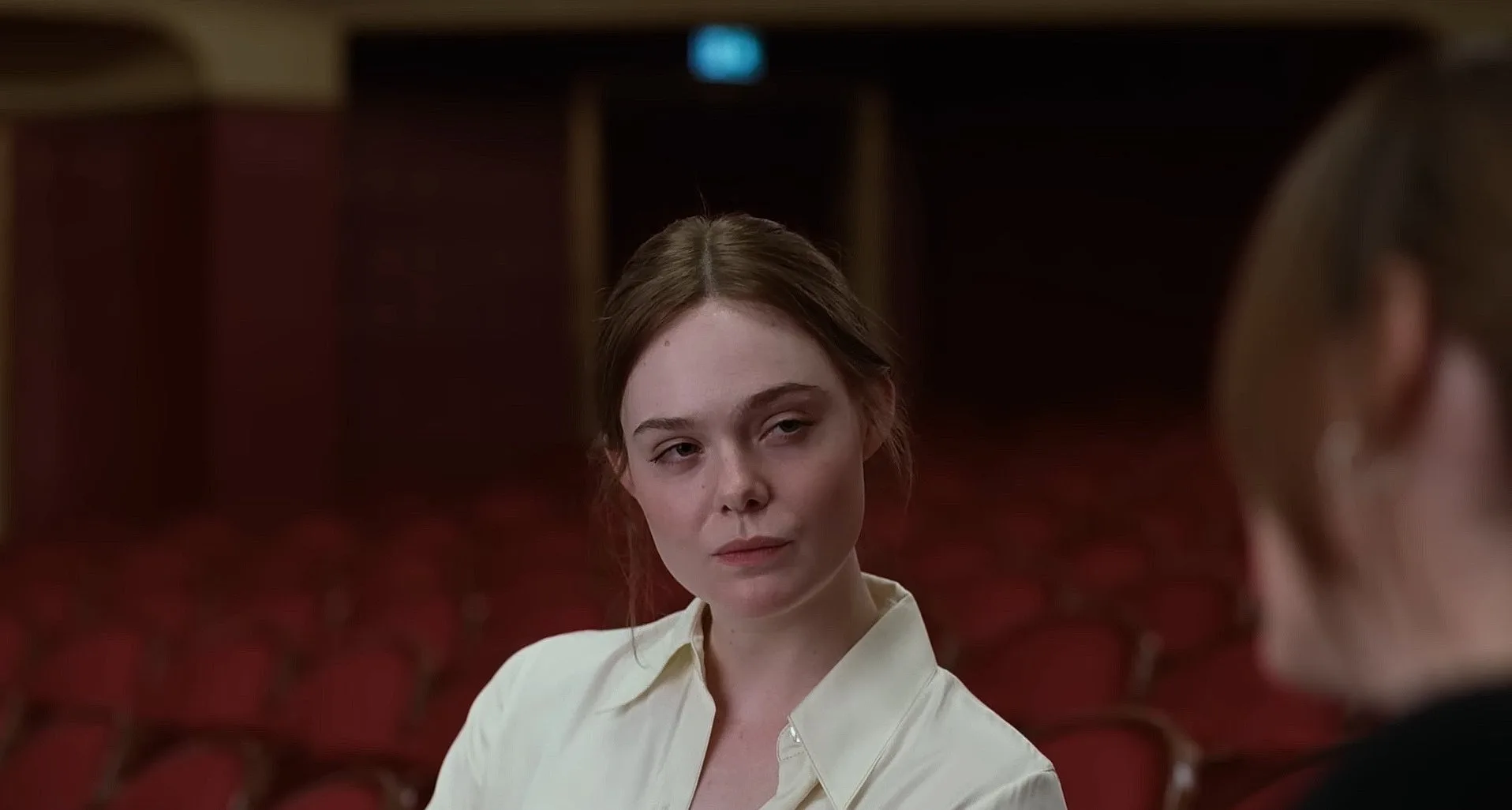
There is a key conversation that happens in the film between Elle’s Rachel and Renate’s Nora at the theater, where they discuss Gustav’s film. Rachel asks why she wouldn’t take the role despite her dad wanting her to accept it. Nora believes her father to be too difficult to talk to, let alone work with. There is a sense of anger and confusion there that only passes onto Rachel, who also tries to make sense of this story offered to her, and the headspace Nora is in, which she must try to understand to gain some ground on figuring out her character’s interiority of a mother that neither of the 3 girls actually knows. It’s a tall ask to play a character that’s so clearly at a distance with herself and with the people closest to her, and Elle understands this assignment quite well. Aiming to convey a sense of loneliness and pain that both Nora and Gustav’s mom might have felt, but struggled to communicate, or even avoided entirely.
The only problem is that it doesn’t seem to be enough for Rachel. There’s a niggling feeling that whatever she tries to do or how much he attempts to learn about the family, she can’t truly fit in the way she wants to. A key line Gustav says about Rachel, it’s hard to love someone who is angry. That difficulty is transmitted through to Rachel. She may understand the confusion and frustration, but she lacks Nora’s anger, and perhaps even Gustav’s mom for all we know. And while she can try to understand her pain, she cannot feel or experience it so a barrier will continue to remain against Fanning’s bright and eager star Kemp. This reaches a culminating point where Rachel and Gustav have a conversation about this incredibly mysterious and challenging role, fearing that she may not be the right fit for his film. No matter how badly she wants to play the part, the part doesn’t seem to be playable for her. Which opens up an interesting discussion long ignored about casting the right people and how miscasts can often come from a place of ego or lack of true understanding of a role.
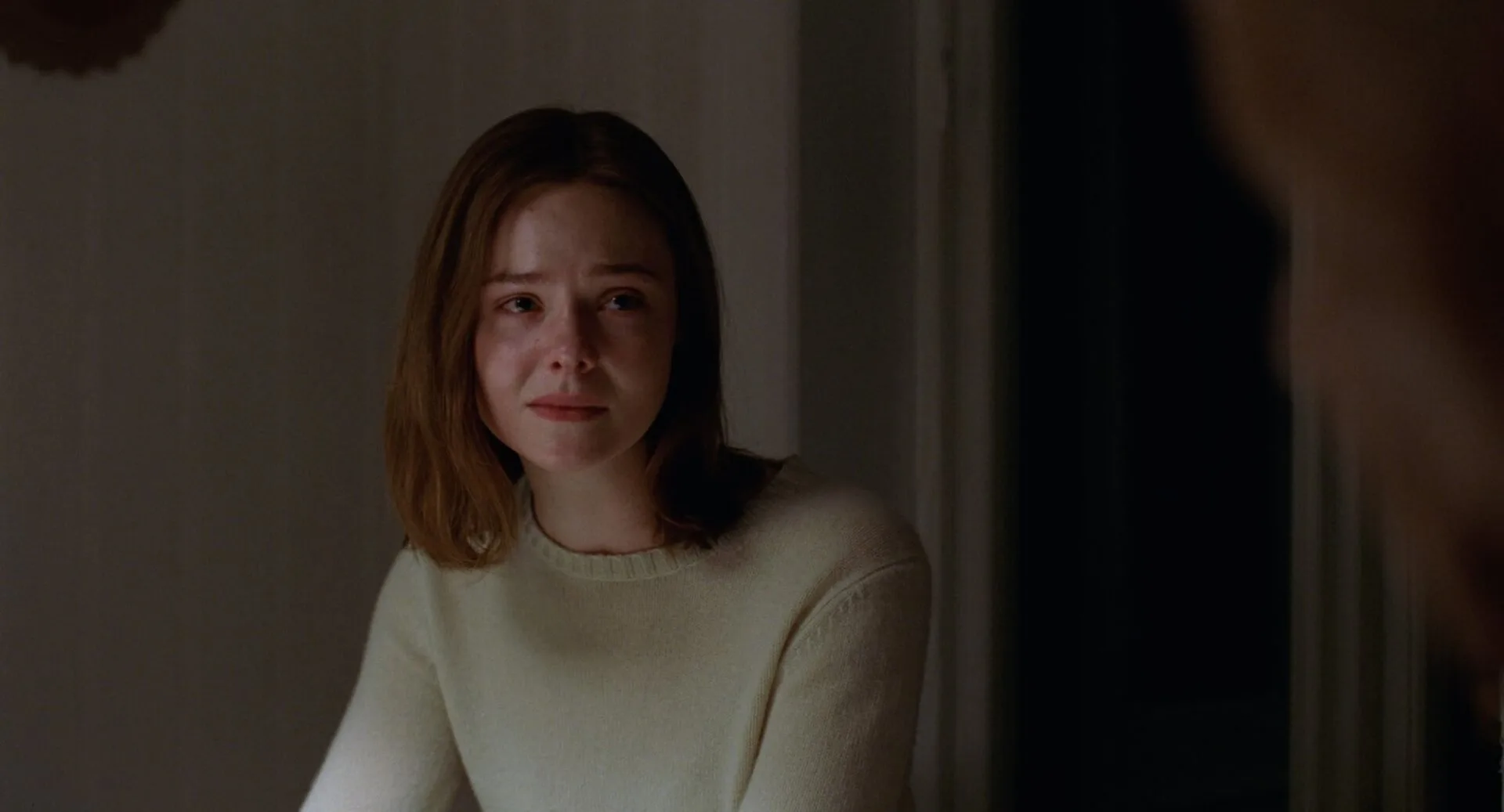
Rachel makes the big call and decides to courageously give up the role. Against her best wishes and hopes of being able to chase that lost feeling that constantly irks her. Much to Gustav’s dismay, yet he cannot help but feel especially proud and grateful that Rachel is able to see what he could not. This sequence is perhaps Elle Fanning’s maturest display of acting that really sells you on Rachel’s unshakeable desire to fill the empty void that’s been quietly haunting her, so consumed by the thought that she wouldn’t be able to tell the stories that feels true to her. That this life changing opportunity is about to slip from her grasp, and may not arrive so soon again. Stellan Skarsgård recognises this difficult but brilliant interaction and raises his energy to match Fanning’s passionate cries for wanting more for herself but the best for Gustav which may not be her. It’s an incredible showcase of actors understanding the gravity of the situation and honing in on their subtleties, to communicate a vivid, tangible moment of mutual respect and compassion. Only made possible by Elle and Stellan bravely exposing their softness, allowing vulnerability to take over the screen and wash the viewers away with their raw emotions.
As Elle stated earlier in the beach, it’s simple and real. While Rachel may not have succeeded in capturing that feeling yet which she continually searches for, Elle most certainly does with a range of notable performances stacking up recently in The Great, Predator: Badlands, The Beguiled, A Complete Unknown, The Neon Demon and Sentimental Value being her purest, most artistic yet. With over 20 years of consistent work, now feels like a great time to reward an incredible actress who does not seem to slow down anytime soon with the upcoming Hunger Games film, and showing no signs of fear, in telling memorable stories with astonishing turns in whatever role she faces. Be it a half android, a lover in a biopic, child roles, a crazed model or a foreigner becoming Russia’s longest reigning female ruler. The American outsider manages to make Sentimental Value her home and delivers an exceptional performance in such a layered, unconventional role that actors only dream of discovering let alone mastering in the way Elle Fanning has done. Come Oscar night, despite how low the odds are in her favor, should a miracle happen and she were to win, it would be one of the most inspired choices in recent Academy history.
Thank you for reading this editorial about Elle Fanning’s Oscar nomination. For more articles like this make sure to check out our editorials section here at Feature First.