
‘Wildcat’ Director James Nunn & Star Lewis Tan Share Joy Of Making Films With Kate Beckinsale And Keeping It Real Against AI
We sat down with Wildcat star Lewis Tan and director James Nunn to talk about the British heist movie, led by Kate Beckinsale.

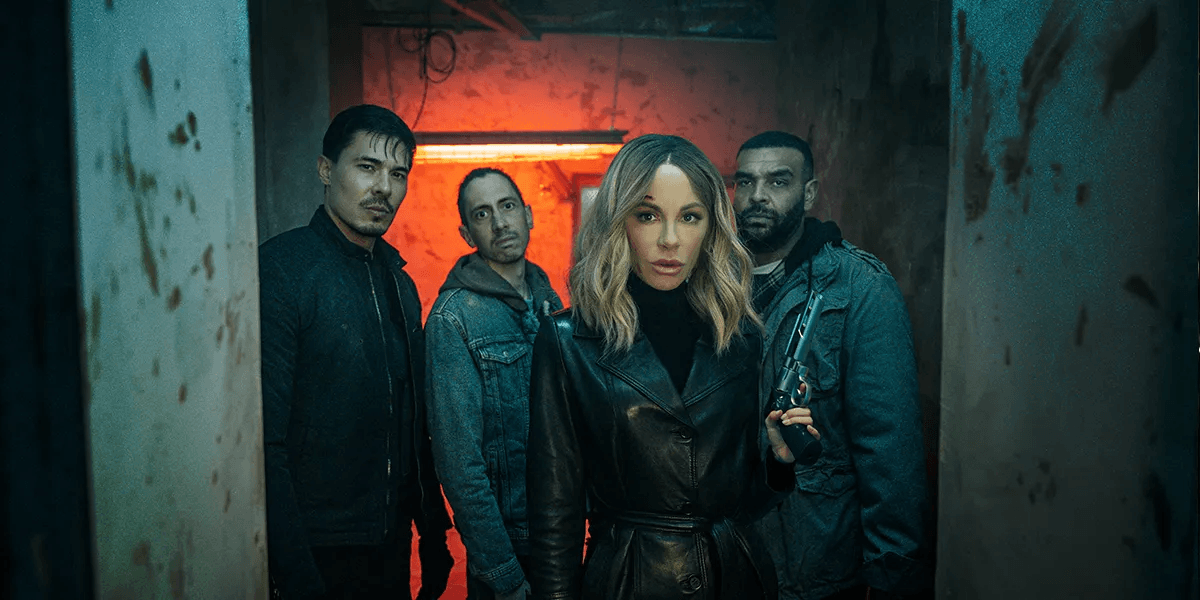
British heist movies aren’t as common as one thinks, at least not in comparison to the American side of the industry. Whether that difference is intentional or an economic cause, is up for debate. James Nunn’s latest feature starring Kate Beckinsale and Lewis Tan focuses on a heist mission that goes awry with personal stakes especially high as their personal lives are at risk.
So I sat down with director James Nunn and star Lewis Tan to discuss the film and the ethos it scratches involving the profession, reflecting on the role of art and films in what they want to do in their lives, working with Kate Beckinsale and her mom’s last set experience.
This interview was edited for clarity and consistency.
Zak Ahmed: I imagine every time you make a film, there’s a special feeling that it feels like it’s the first time all over again. Could you talk a bit about how it feels to even finish a film?
James Nunn: It’s a kind of euphoria, because the shooting part of the movie is actually very small in the scheme of the whole process. For example, the writer on this movie actually wrote the movie about eight years ago, and it took him maybe seven years to get it to a place where people were kind of willing to put money in it, read it and attach stars like Lewis and Kate and the rest of the cast. So then once that happens, you you shoot the movie for five weeks and then spend another five to six months in a dark room worrying about all the decisions you made. Trying to improve them still and make an even better movie out of everything. You just have this euphoric come down where you’re like ‘Oh what am I going to do with my life now’. Then you have the anticipation and wait for people to watch it, then they review it, where they love it or hated it or whatever. You’re thinking you now got time to think about what you should do next.
Lewis Tan: That’s just the director’s point of view. For me, it’s quite easy, man. I just roll up, kick some heads, and then I fuck off. Then they invite me to the premiere. That’s what happens to me. Amazing. No, I’m joking.
James: We should swap.
Lewis: We could swap anytime. Let’s do it.
Zak: Would you like to direct?
Lewis: Oh, hell yeah. That’s coming in the future for sure. Yeah, I’ve been planning on doing that. I got a few things in the barrel being prepared and when it’s the right time, I’m going to pull the trigger and show people what I can do. Then I’ll be calling James and saying I know what you mean now. Help me.
James: No, you can call me for an acting role, please.
Lewis: Yeah, no, I will do that. By the way, he has an acting role in this movie. I don’t know if you saw it. There’s a little cameo in this movie. where a very intimidating man drives me to a big action sequence in a taxi cab. You would never know it, but there he is.
(Can confirm James is in the movie)

Zak: The premise of the film is a heist that goes wrong. How would a British heist compare to an American heist?
Lewis: Good question.
James: Well, I think probably Lewis has done one. Have you done an American Heist movie, Lewis?
Lewis: No, not really. I haven’t stolen diamonds or anything. I’ve stolen cars. What’s the difference, James?
James: Technically, I’m not a criminal. So I can’t be specific one big thing that’s kind of in America, they have firearms quite open and quite willingly. Whereas in the UK, it tends to only really be a special unit of the police that have firearms or, kind of naughty, gangster types. So I imagine in America, if I was to make an American heist movie, there’d probably be a few more bullets flying around.
Lewis: There’s more places to park in America, so you can really have a big, good getaway. But as you see in the movie, in England, the parking enforcer, which is such a great thing to add to a heist film, is a parking guy knocking on the getaway car. I love that scene so much. That would happen in England.
Zak: Well, definitely. Especially now because I am based in London and I feel like driving is pointless nowadays because parking is so expensive and I just need the tube to get to central. It feels impractical to drive.
James: I feel you. I live in London as well. Let’s not make this about traffic, but it’s got a hell of a lot worse in the last 15 years.
Lewis: Yeah James, why don’t we just take the tube after the heist?
James: Well the tube after the heist is a great idea. To get specific on you, I’ve got another movie which is completely set on the underground, and shooting on the London underground is actually very expensive, would you believe? So that is probably why we didn’t do the heist on the underground.
Lewis: Maybe if you’re on the Elizabeth line, but you got to go to one of the lesser known lines.
James: Yeah, true.
Zak: One line that struck me at the beginning of the film was between Ada and Roman in their interaction in the past. Our work is who we are but Ada says it’s what we do. How do you interpret that interaction and why they have that contrasting ideology despite being a couple in that time?
Lewis: It’s one of those moments. they were working special forces. That type of lifestyle is not conducive to having a family for many reasons, because your life is on the line every day. These guys are really putting themselves out there and risking everything. for what reason. It seems to me, I watched a lot of podcasts and interviews with soldiers, and at the time that they’re doing the deployment, they can only focus on the mission and accomplishing the mission and surviving, really. Later on, after they hopefully survive and they come back home, then they say, well, it’s all about family. I’m sure it is, but you can’t be thinking about that in the moment. Because the things that these guys have to do takes a lot of focus and you can only think about the mission and how to get the mission done.
So that’s kind of where Roman is at in his mind at the time. We are not built for this. We’re different type of humans. We are built for this. So this is who we are. We can’t change these things. I think that that’s kind of where he was at in that time in his life. Not ready for a relationship, not ready for a family, wants one, but doesn’t even have the emotional availability to do that. Which I quite understand, there’s different moments in people’s lives where you’re not accessible at that time. Maybe you will be a years later on with some growth and with some maturity. So that’s what it meant to me.

Zak: I want to extend that to yourselves as an artist. Is what you do as an actor, as a director making films, who you are or is it just what you do?
James: Oh, wow. This is deep. It is who I am. And it is what I do. It’s a convoluted quote itself.
Lewis: Are you stealing from Tom Cruise’s honorary Oscar speech right now?
James: You know what? I don’t know how to do anything else anymore because I’m 40 years old now and I started running on my first film set when I was 15, which is 25 years ago. Then I directed my first movie when I was 25, which is 15 years ago. I obviously made a series of very lucky choices in my life and been in very fortunate positions with friends and people to continue to do what I absolutely love doing. But there is a similarity to filmmaking and perhaps those specific lines in the script. I’m not trying to compare filmmakers to military in any regard because the military are saving lives and are doing a much more heroic job than we are. We’re making entertainment for people to enjoy after they’ve had a long day or a long week, and they want some escapism and need to unwind, and get recharged on a different kind of emotional level.
Lewis: There are some similarities though, certainly for sure. As far as when you’re in pre-production, you’re building a battle plan, then you have let’s say three to six weeks to execute this plan. Everybody’s on walkie talkies making sure everything’s perfect. Then boom, the mission’s done, the film is over. Now it’s one of those things where you do feel like sometimes, like James is saying, obviously, it’s very different in realistic terms but the way that you set it and plan it and meet these people they’ve never met before, and you accomplish this quick mission. It does feel like that, right?
James: Totally and then you actually have the physical side of doing it like a mission as you say, but then you equally do have to make sacrifice with family and relationships, emphasising the themes in the movie like being with someone you love, but you have to throw a lot of your time to something else, because it’s all you know how to do or it’s what you’re addicted to doing. Having children, giving time, love and space to those things and not wanting to feel like you’re not being a good dad or whatever. So yeah, there are lots of similarities in the script to filmmaking.
Lewis: That’s a deep-ass question, because I wouldn’t feel like myself if I didn’t do this. So it’s equally both of those things. I don’t want to define myself by the work, but I wouldn’t feel like myself if I wasn’t able to make films.
Zak: To bring Kate [Beckinsale] into this as well. She speaks a bit of Russian in the film, and from your background, you bring in your stunts and martial arts. As actors, do you thrive or how much do you enjoy incorporating your own personal skill set, something that you learned your own life, now in the art that you’re making?
Lewis: Yeah, for sure. It’s just one of those things, especially nowadays in this time period that we’re in where you can AI anything, and you can make this guy fight a hundred people and he’s in the middle of the desert and helicopters are crashing and then aliens come down and the whole thing burns to the ground. Five seconds later, you have a clip of that. Whereas when you genuinely have an artist who’s performing, whether it’s martial arts or whether it’s dance or whether it’s Tom Cruise flying helicopters and jets and this and that, it’s real and it’s visceral, and the emotion is transferred into the screen. That’s what we’re trying to capture. That’s what the whole point of filmmaking is, capturing these artists, telling these stories. I just feel like it’s not only much more impactful, but it changes everything. It’s like hearing an orchestra live or hearing an orchestra on someone’s cell phone sitting 50 feet away from you. It’s there, but it doesn’t hit you the same. So I’m trying to bring that and keep that art form alive as long as I can. I know James is too.
James: Absolutely. Yeah, I second everything you said. Making the films with real people doing their real skills is a really electric thing to watch as well. You get such a buzz, as soon as, you know it, Lewis has got pretty long take fights in the movie and you see him get through that choreography. You see the energy build in, he’s the one doing it, he’s spinning it. But I’m sitting by the screen just getting closer and closer to the screen, like he’s going to do it, going to finish it, getting all the way through it and then he does. I’m like, ‘Oh’ and I feel like I’ve been on the rollercoaster and I think some of that energy, I think that’s the reason I particularly do like long take scenes and fights, because seeing them get through it just adds this level of stress, tension and enjoyment. The release is so much more pure and breath-taking because of what you’ve just endured. I’m a big advocate for that. And Lewis is very skilled and able to perform in that way.
Lewis: Let’s continue making those films, James.
Zak: I am aware that this film in particular is Kate’s mom’s last set that she visited before she recently passed. Any fond memories you’re willing to share, I would love to hear about her? I’m sure it was a special experience.
Lewis: Yes. She came to set, didn’t she James, a few times?
James: Yeah. Judy came to set to see us and meet the gang and she was lovely and welcomed with open arms. She sat beside me with her own headset on and watched Kate act and perform and do a scene with the guys. We were very lucky to meet her and be part of that story for Kate and her mum and very, very sad, obviously, for Kate too and stressful as well to do a movie so in depth and exhausting, and also be caring, loving and available for her mum, which she was, she very much was. So we feel very blessed to have her in part of that story.
Lewis: Kate was really going through it emotionally there and then she would show up on set and just perform, and it was insanely mesmerizing and inspiring because she was dealing with a lot and then coming on set and being a professional. So my hats off to her and my condolences to their family for sure. But she was good fun too. You can see where Kate got her sense of humour from as well.
James: Totally, yeah. Very similar, very cheeky.
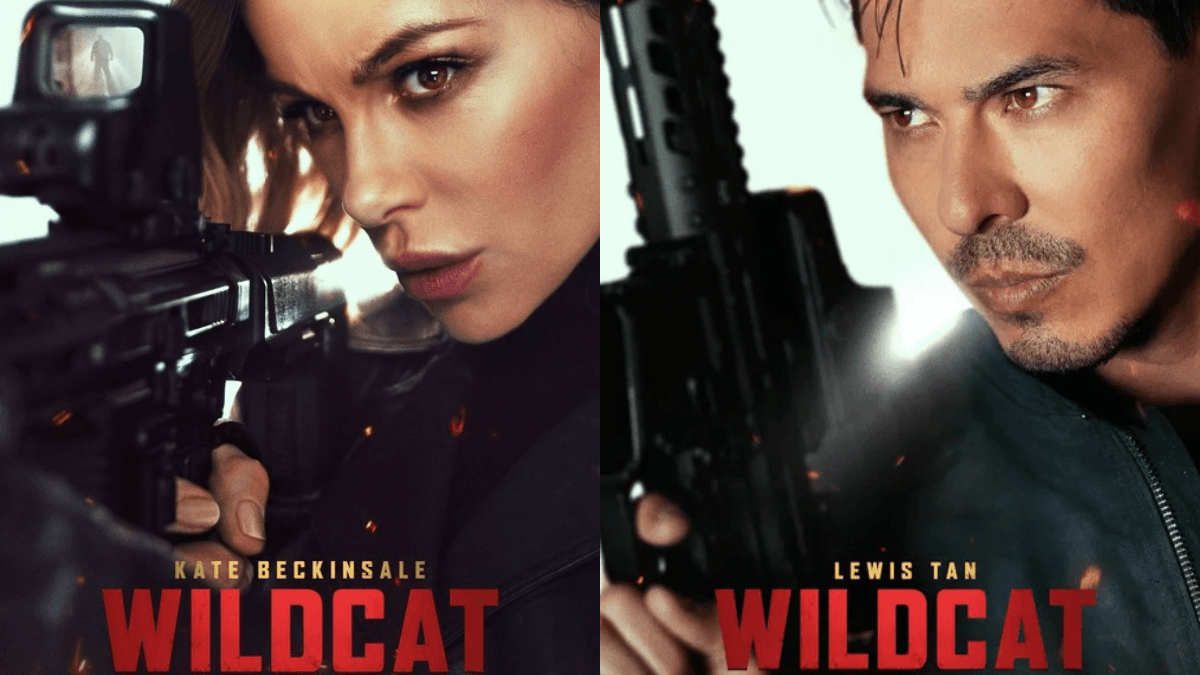
Wildcat is directed by James Nunn and stars Kate Beckinsale, Lewis Tan, and Charles Dance. The film is now available on all digital platforms, where you can purchase or rent it below:

Thanks for reading this Wildcat Lewis Tan James Nunn interview. For more, stay tuned here at Feature First.