
‘The Secret Agent’ Review: Wagner Moura Shines In Exceptional Brazilian Paranoid Thriller
Kleber Mendonça Filho delivers a tremendous follow up to last year’s I’m Still Here as Brazil’s representative.

Over the past year or so, we have witnessed a resurgence in Brazilian cinema. From Walter Salles’s I’m Still Here helmed by an exceptional acting veteran Fernanda Torres finding its way into the Hollywood spotlight and taking home best international feature at the Academy Awards, this year is no different. Director Kleber Mendonça Filho releases his own follow up to I’m Still Here with The Secret Agent as a perfect double feature, exploring the Brazilian military dictatorship that defined the 70s. Where the people were victims of an authoritarian regime, not too dissimilar to the current state of several countries right now, including US and UK. Emphasising how history repeats itself endlessly as the world fails to learn from its mistakes, only eager to make more.
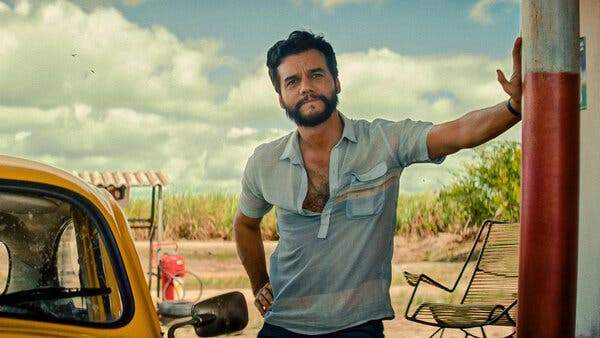
The film starts with the talented lead Wagner Moura playing a former professor and recent widower Armando who travels to Recife during the Carnival. A place once called home, his son Fernando lives with his grandparents after the murder of Armando’s wife Fátima. Kleber recognises the immensity in professor Armando’s dilemma, who now goes by Marcelo as a refugee, as he bravely documents his threatened life in the quest of searching for his mother’s identity that traces back to a personal vendetta with a Government minister. A dangerously selfish individual who tore apart the research facilities intended for improving technology and education in support of the public’s needs that Armando was facilitating with his team. Further demonstrating the evil and petty nature of the military dictatorship that reflects much of the oligarchy that plagues our modern society. The rest of the world suffers and fails to prosper as the people in power make it their mission to prevent any sign of progress, defunding necessary projects and destroying the lives of good willed people, to satiate their own greed and keep the lower classes stagnant in their position in society. After all, the rich think they can only thrive when the poor remain poor.
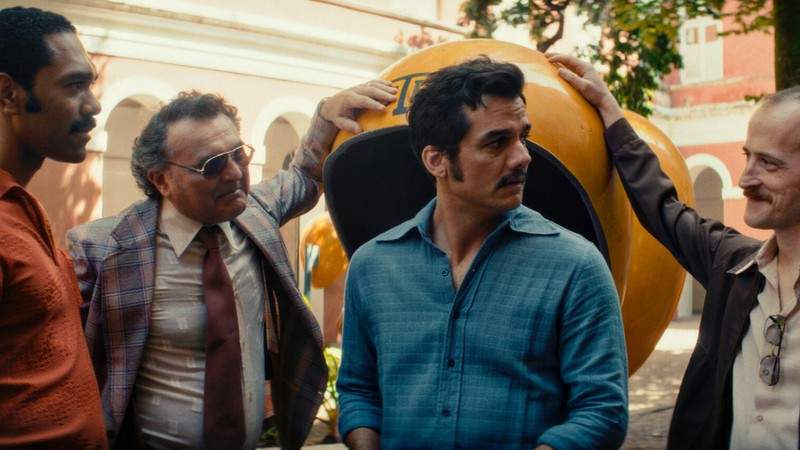
It is this simple principle that defines much of The Secret Agent’s political landscape and beautifully anchors into an overarching meaningful message, reminding us of how corruption festers and the price we continually face for doing what’s right as the wrongdoers (fascistic government) aims to make us lesser. Kleber blends this family drama with its historical context to spin a paranoid thriller bordering on the absurd, channeling how the media feeds into the narrative frenzy that tyrannical regimes often disguise behind. You see this with how the leg shark revival story takes centre stage in the newspapers and the carnival tragedy that killed 90 and counting, which overlaps to create mass hysteria and deflect from the impunity of the Brazilian government. It’s frustrating to watch because these exact tactics are used to diminish the public interest in relevant matters and mythologise tragedies for the sake of mockery and deceit, further dehumanising and normalising the very concept of manufactured human loss. It is harder to keep up with tragedy and inflicted pain when narratives are spinning around to diminish the severity of suffering.
I love how Kleber understands this enormous challenge to tackle such a painful past and shed light into the complexities of these refuge victims who take on the lives of many to protect their families and loved ones, even at the risk of forgetting their own memories and identity. It places a great burden on the marginalised, the immigrants and those with the power of knowledge who can expose the evils of those who rule us. From the Angolan Civil War refugees to other lonely souls all taken care of by anarchist-communist heroine Dona Sebastiana (Tânia Maria).
What makes The Secret Agent especially captivating throughout is the exceptional filmmaking on display that employs several techniques to heighten its multi-genre appeal. The split diopter shots increases this paranoia and develops distanced tensions within the spaces of the rooms, while the split screen close ups and clever dissolves into familiar patterns demonstrate the remarkable technical aspects of the film that steadily climbs into a a fast paced crescendo, yet never fully explodes or reveals its hand, only hinting at what’s to come which drive elements of surrealism, action, gore, intimate drama and character moments. Which is a genius, and somewhat refreshing angle to take, highlighting how the winners often rewrite history bending to their will while the victims are having to scatter and restart aimlessly, finding themselves in places that are coincidental to their lives yet only proves that human lives in this world are far more connected than they think. The epilogue captures that sentiment perfectly without giving it away.
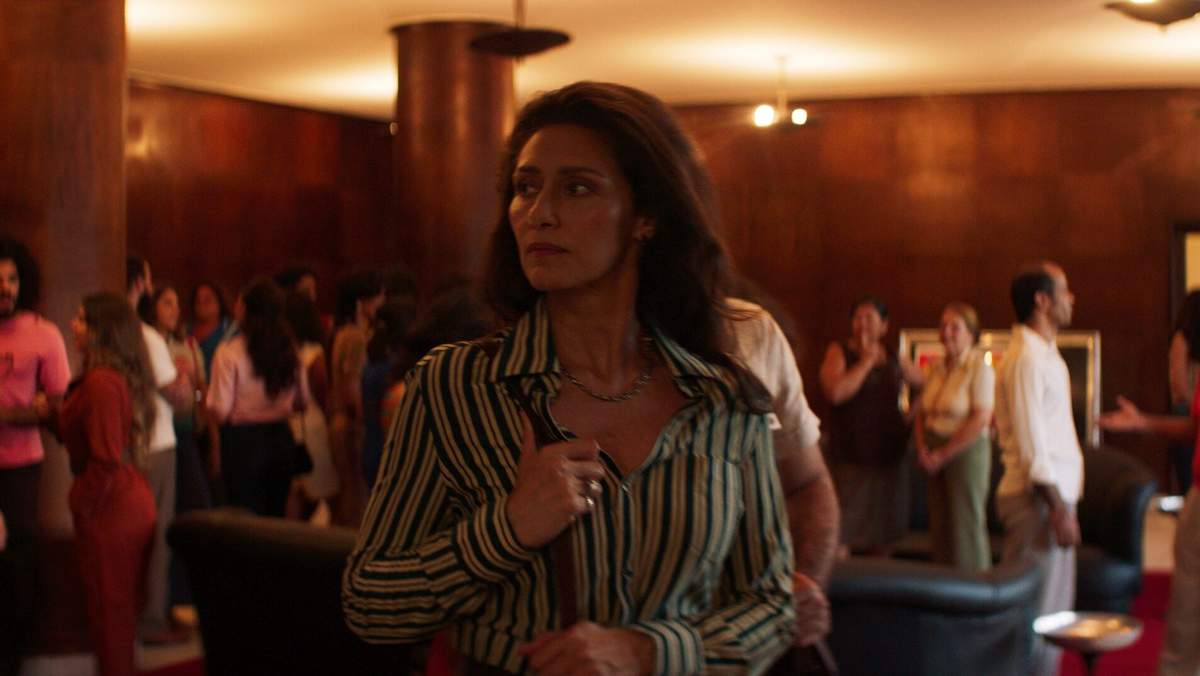
Of course, the cast is tremendously important and memorable down to every character, with Tânia Maria, Alice Carvalho and Carlos Francisco leaving an incredible impact, particularly Fátima’s character who almost singlehandedly steals the entire film with such a remarkable display of strength and character of someone who knows what good and bad truly is when identifying a persons nature. The restaurant scene is surely a standout and its eventual effects on revealing Alexandre’s vulnerability tugs on the heartstrings. But the main star is undeniably the talented Wagner Moura who delivers an impressive performance that fearlessly carries the resolve and fears that define the power of good people who suffered from the hands of evil. Simultaneously showing courage and tenacity in his convictions as the secret agent while expressing genuine vulnerability and sadness for the murder of his beloved wife and his widowed loneliness who risks everything on behalf of his only son, hoping they can one day be free. Just like Fernanda Torres, we see a remarkable Brazilian actor who understands the nuance and tortured history of a resilient individual and helps to guide us into a fortress of empathy, only wishing they weren’t hard done by. The ending where he plays his own son as an adult is a distillation of the entire weight of his performance and is undoubtedly a highlight of the year.
While winners may define history, the truth will always reveal itself over time and force the world to recognise its sins and reconcile trauma that carries over across generations, renewing faith and hope for a better future, where evil cannot survive so long as good exists to fight the cause. Regimes are meant to collapse and we will see this in real time just as the Brazilians did 50 or so years ago. As the Academy gradually learns to accept international films as cinema, a distant dream not too long ago. There is still so much to learn, and in fact, perhaps we can all learn a lot from Brazilians in this bleak timeline we live in.
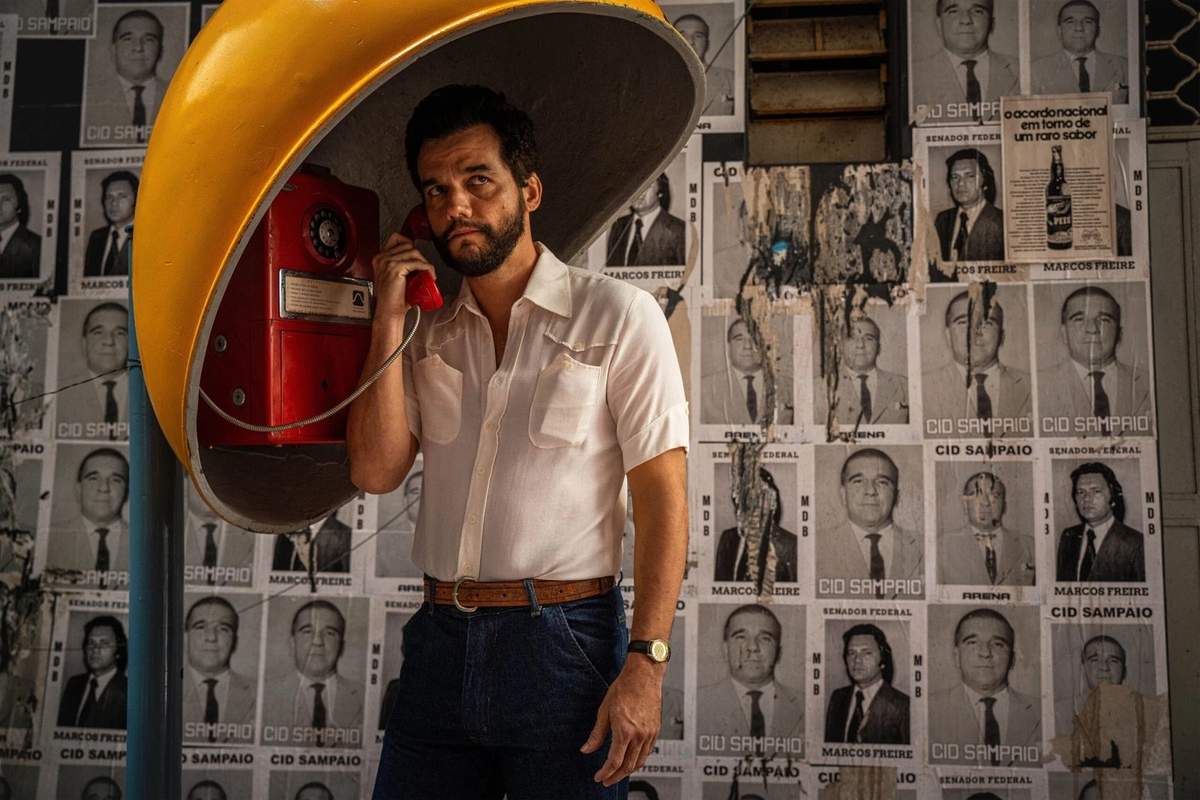
The Secret Agent is directed by Kleber Mendonça Filho and stars Wagner Moura, Udo Kier, Maria Fernanda Cândido, and more. The film is now playing in select theaters.
Thank you for reading our review of The Secret Agent. Make sure to check out more reviews here at Feature First.