
‘It Was Just an Accident’ Review: Palme d’Or Winner Delivers
It Was Just an Accident exemplifies the resistance to — and repression by — the regime of the Islamic Republic in a distinctly working-class Iranian perspective.

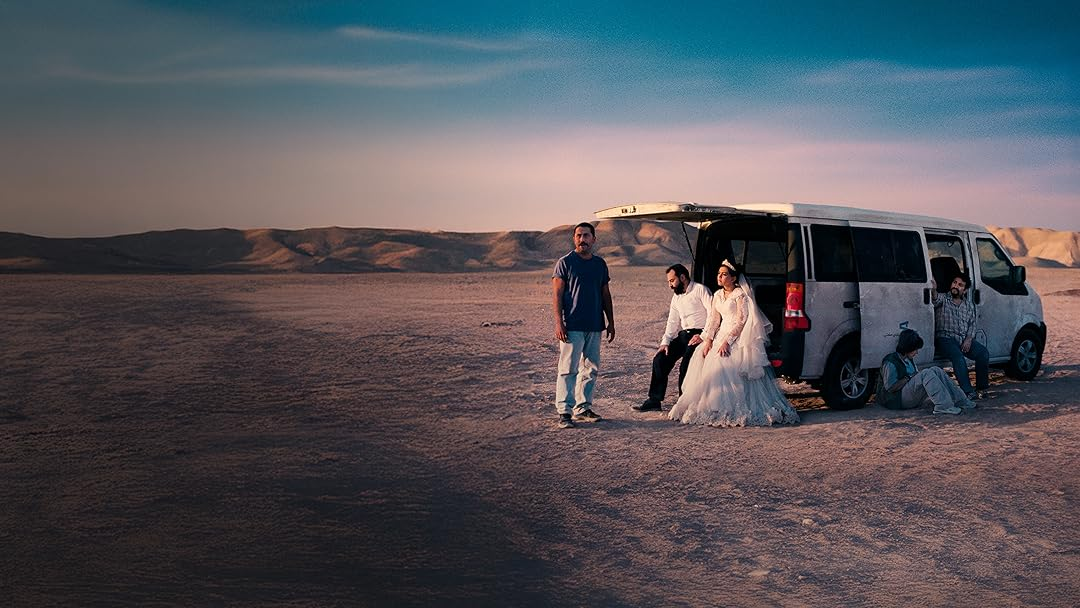
I missed out on watching Jafar Panahi’s It Was Just an Accident during its U.S. theatrical run last October, but I can’t help feeling that I saw it at the perfect moment, as regime-change protests once again rage across Iran today. It Was Just an Accident exemplifies the resistance to — and repression by — the regime of the Islamic Republic in a distinctly working-class Iranian perspective, without falling into the historical revisionism that often distorts discussions of Iran, particularly the romanticization of the puppet Pahlavi dynasty.
Panahi’s film begins with a one-legged man driving through Tehran late at night along with his pregnant wife and young daughter. In the darkness, the man runs over a dog and after a few moments of more driving, the car gives up and breaks down. They stop at a small shop where a man offers to help fix their car. Upstairs is Vahid, an Azerbaijani-Iranian auto mechanic, who once was sentenced to prison and tortured for “collusion and propaganda” against the regime — in other words, a working-class laborer who protested for better wages and work conditions. Vahid hears the footsteps of the man with a prosthetic leg and is paralyzed with fear. He recognizes the footsteps of the man he thinks is Eghbal, his torturer from his days in prison.
The next day, Vahid abducts the man with the intention of burying him alive to exact his revenge. As Vahid throws the man into his intended final resting place and sets about filling in the dirt, the man reciprocally throws doubt on Vahid’s hypothesis of his guilt. Though still self-sure about his identity, Vahid refuses to murder a potentially innocent man. The confused Vahid sets off on a quest to verify the alleged torturer’s identity, bringing him to Shiva, Ali, Goli, and Hamid, who also suffered the same fate as him in prison under Eghbal. Together, they must decide whether the man truly is their tormentor, and if so, what is to be done with him. What is justice in the absence of accountability?
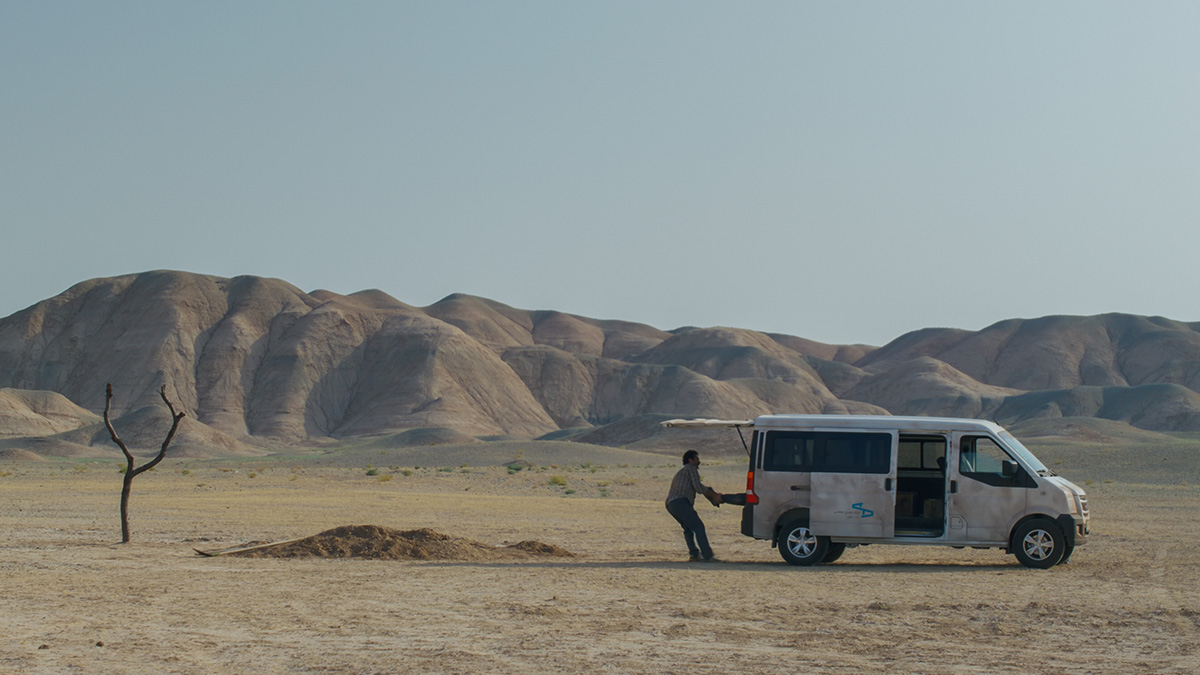
Beyond the identity ambiguity, It Was Just an Accident functions as a morality play, rigorously exploring the dilemma and contradictions faced by its characters. They are forced to confront vengeance and forgiveness within a system where repression is normalized and accountability remains elusive. These character moments — moments of deliberation, rather than acts of violence — feel like the core of the film.
Perhaps my favorite scene, and the film’s most revealing, rather than the climax, is one in which our characters simply sit and wait and talk. Hamid, hot-headed as ever, urges the others to bury the suspected Eghbal alive, insisting “We are at war! This isn’t a game anymore! If you don’t kill, you die!” Ali, the only member of the group who was not imprisoned, has remained neutral until this moment, encouraging the others to leave Vahid alone with the man and go their separate ways. After being provoked by Hamid, Ali finally offers a perspective that feels widely-held but rarely spoken:
“I know those who were supposed to liberate us kill our youth while reciting prayers.”
In a single exchange, the film collapses the contradictions of liberation, religion, and violence, refusing to concede moral standing or purity to either state power or its would-be alternatives. This moment lays bare not only the film’s own central conflict, but the internal conflict and unresolved tensions from Iran’s 1979 Revolution and the political order it left in its wake.
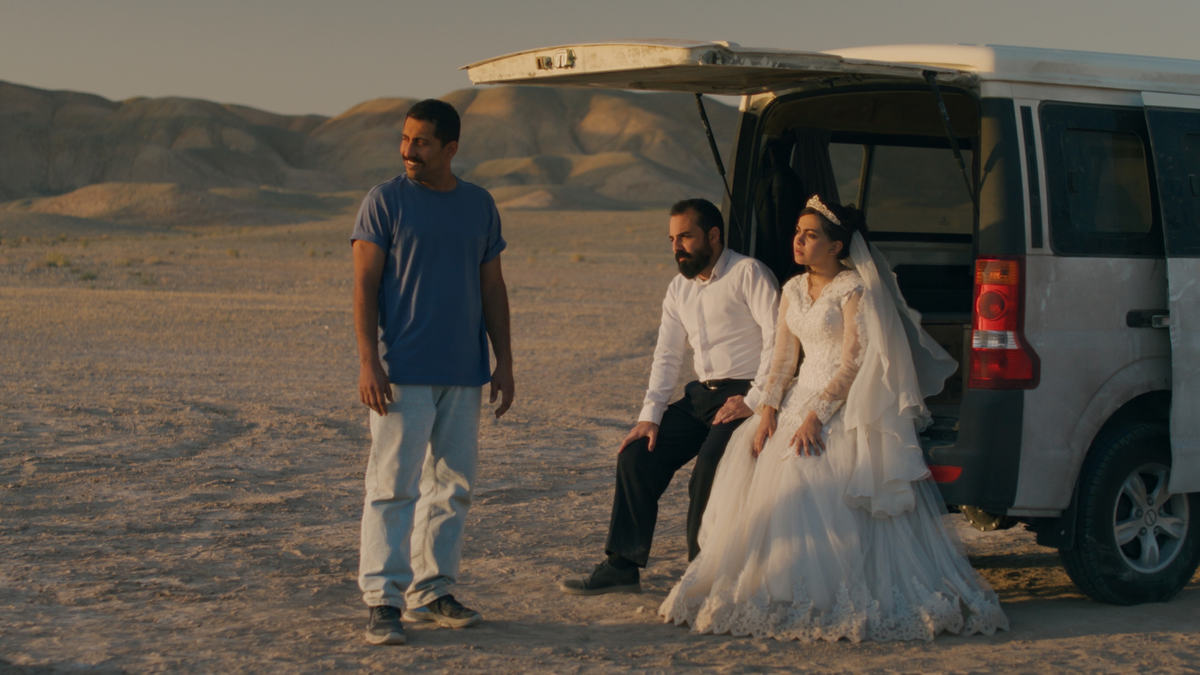
Jafar Panahi does not do this through a spectacle of violence, nor does he capture mass protests on the streets of Tehran like the ones gripping Iran today. This may have been difficult to do given his compulsion to shoot in secret due to his filmmaking ban; however that was never Panahi’s point. If the regime is to fall, it will fall as a result of Iran’s internal contradictions exploited by its masses who have been repressed for nearly fifty years, not because of smoke-and-mirrors mass protests broadcast to the West, which has been vying for total control or collapse since 1953.
Panahi keeps his critiques of the regime grounded in the perspective of the Iranian masses, not geopolitical enemies who wish to topple a sovereign enemy, nor post-revolution émigré who lament the fall of the monarchy. Iran’s Islamic Revolution of 1979 was a popular and coalitionary one against a brutal and repressive monarchy. The autocratic Shah was a Western-backed puppet who overthrew the democratically elected Mohammed Mossadegh in 1953 in an illegal coup after Mossadegh tried to nationalize Iran’s oil and resources. The Shah ruled with an iron fist, suppressing nationalist movements as he and his Western backers saw fit. The 1979 revolution was a long overdue culmination of a popular liberation struggle. Panahi infuses the film with these truths to then juxtapose the new regime’s actions in the name of upholding the revolution. Panahi’s film is not an attack or wholesale denunciation of the Islamic Republic, but reads more like a tragic reckoning with a revolution that liberated a nation from imperial domination yet failed to fully emancipate the people in whose name it governs.
Jafar Panahi’s long-standing censorship and the necessity of clandestine production are unfortunate obstacles, to be sure, but they also evolve into conditions that shape his craft and the political clarity he seeks to portray. Forced to work without permits, large crews, overt displays of dissent, or even professional, established actors, Panahi must turn inward and narrow his focus to intimate spaces and conversations, capturing ordinary people, literally, in extraordinary moral binds — both as they decide the fate of Eghbal and as they confront the conundrum of making a nuanced film like It Was Just an Accident, only to have it be condemned as counterrevolutionary propaganda.
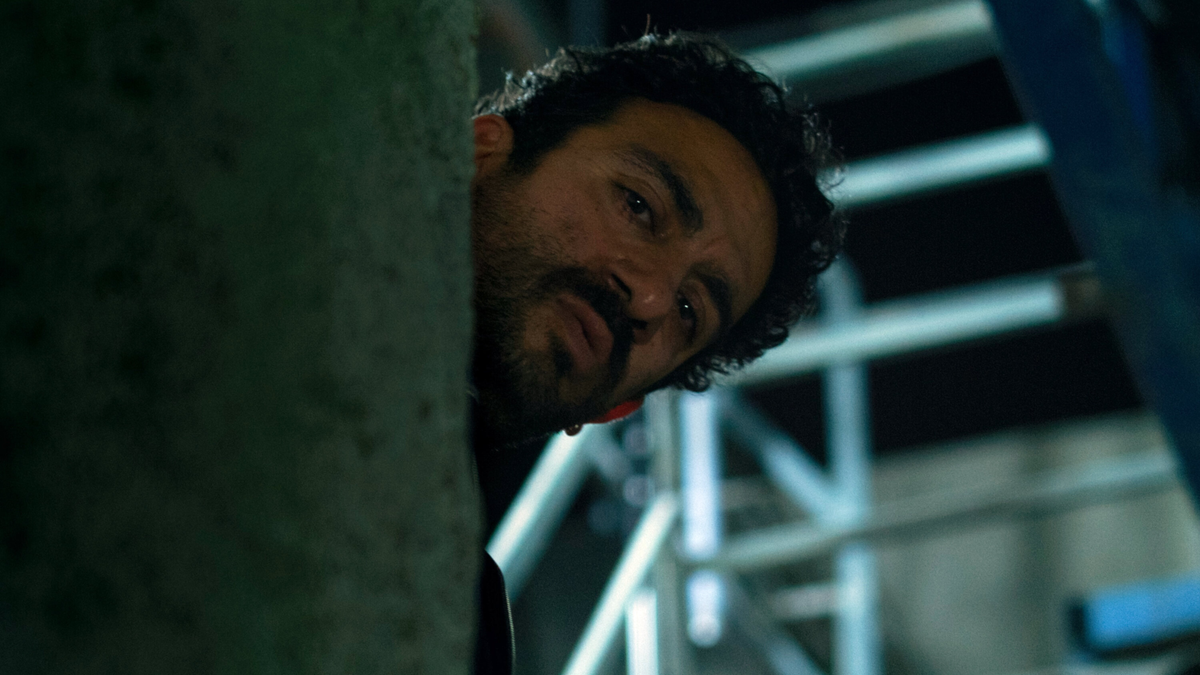
There are no sweeping crowds of rioters to be found in It Was Just an Accident, no cathartic uprising to capture. The absence of spectacle mirrors the lived reality of repression and state violence. In this sense, the constraints imposed on Panahi do not dilute the film’s craft or critique, but sharpen it, transforming something borne out of compulsion to feel like clear intent. Moral grandstanding and easy condemnation are set aside for a resistance of deliberation and ethical uncertainty.
As the future of Iran remains uncertain amidst mass protests of unclear intentions beyond toppling the government and external calls of regime change, Jafar Panahi’s It Was Just an Accident offers a nuanced perspective wholly and purposefully driven by real Iranian voices on the ground. Panahi refuses to engage in monarchical romanticization or regime apologia, but confronts these contradictions head-on by simply having its characters deliberate the massive political quandary they live under. For Panahi’s bold and masterful morality play, that delves into resistance in the face of repression, portrayed through intimate deliberation and dialogue rather than easy moralizing, the Islamic Republic of Iran rewarded him with a year in prison and a two-year travel ban. Despite the repression he has faced, It Was Just an Accident ensures his voice and the voices of countless others are never silenced.
It Was Just An Accident is written and directed by Jafar Panahi and stars Vahid Mobasseri as Vahid, Mariam Afshari as Shiva, Ebrahim Azizi as Eghbal, and Hadis Pakbaten as Goli/Golrokh.
Thanks for reading this It Was Just An Accident review. For more, stay tuned here at Feature First.