
‘28 Years Later: The Bone Temple’ Review: A Hellish Return At Its Most Brutal
The first stand out feature of 2026, Nia DaCosta delivers an intense follow up to Danny Boyle’s recent deathly focused sequel. Read our 28 Years Later: The Bone Temple review.

Somewhat similar to the journey of James Cameron’s Avatar, it would be fair to say that people have been waiting quite a long time for the true sequel to Danny Boyle and Alex Garland’s unflinching and ahead of its curve apocalyptic horror 28 Days Later back in 2002 (We pretend to ignore the existence of 28 Weeks Later). 28 Years Later released last year to dazzling raves, cited by several as one of the best films of the year and a wait that felt worth its time. Maintaining Boyle’s frenetic camerawork and dynamic scenery to Garland’s meditative story centring on Alfie’s relationship with his parents and of course Ralph Fiennes astonishing turn as the doctor wise beyond his years.
Yet, much like Fire and Ash, here we go again with another sequel so soon to its previous instalment. The Bone Temple, only 6 months afterwards but the main man himself is not behind the camera. Director of Hedda, Nia DaCosta chooses to take on the reigns of this franchise and keep the British Zombie horror alive, which she succeeds to the surprise of many. None of which was lost on me as Hedda was an underrated gem of last year featuring stunning visual practise and memorable performances.
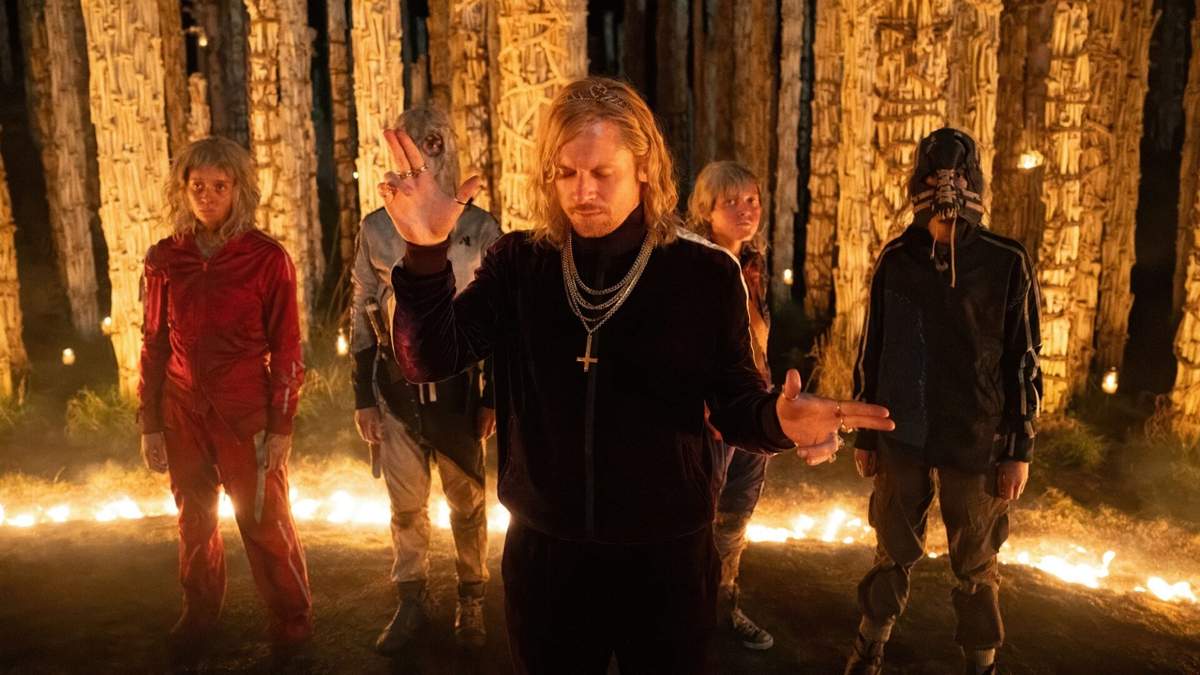
DaCosta’s The Bone Temple ends up being the most brutal sequel yet with even more emphasis on the state of the neighbourhoods, the virus effects and the extraordinary nature of a post apocalyptic world, with long time collaborator Garland returning to mix and match with Nia’s more restrained and choreographed vision. Immediately starting off from where we left at the previous entry with the introduction of Jimmy Crystal (Jack O’Connell) and his cronies, Spike (Alfie Williams) is tasked with joining the gang and navigating the hellish path he just narrowly escaped from. There’s no mom or dad to save him this time though, so the stakes seem amplified for our childlike perspective.
If you wondered where Spike’s story will go from here that question is instantly answered as he explores the terrains of the British countryside, along with Jimmy’s cult, performing satanic rituals and invading homes to make use of the poorly civilians. Emphasising a steadily developed theme over the course of the franchise that no one is more inhuman than zombies, not even the very humans themselves.
What separated Danny Boyle’s signature on this franchise is what would come to define it as Nia DaCosta attempts to replicate those footprints. While it makes for an entertaining watch it is certainly no Boyle, but that is only a testament to the veteran auteur, whose full throttle confidence and iPhone-like camera turns take a backseat for DaCosta’s more measured and precise design which is exhilarating in its own ways, even if more traditional and laboured.
Differentiating the films is the story structure, where 28 Years Later refused to anchor itself on any normalcy, instead moving around like a maze, offering unpredictability and absolute chaos in its resourcefulness despite lack of cohesion. The Bone Temple pivots from that approach and goes for a more balanced interplay between multiple narratives, aimed to meet at an exact point in the final act, which allows for more intimate moments between the characters and a direct confrontation of morality that almost feels like fate with an unforgettable encounter.
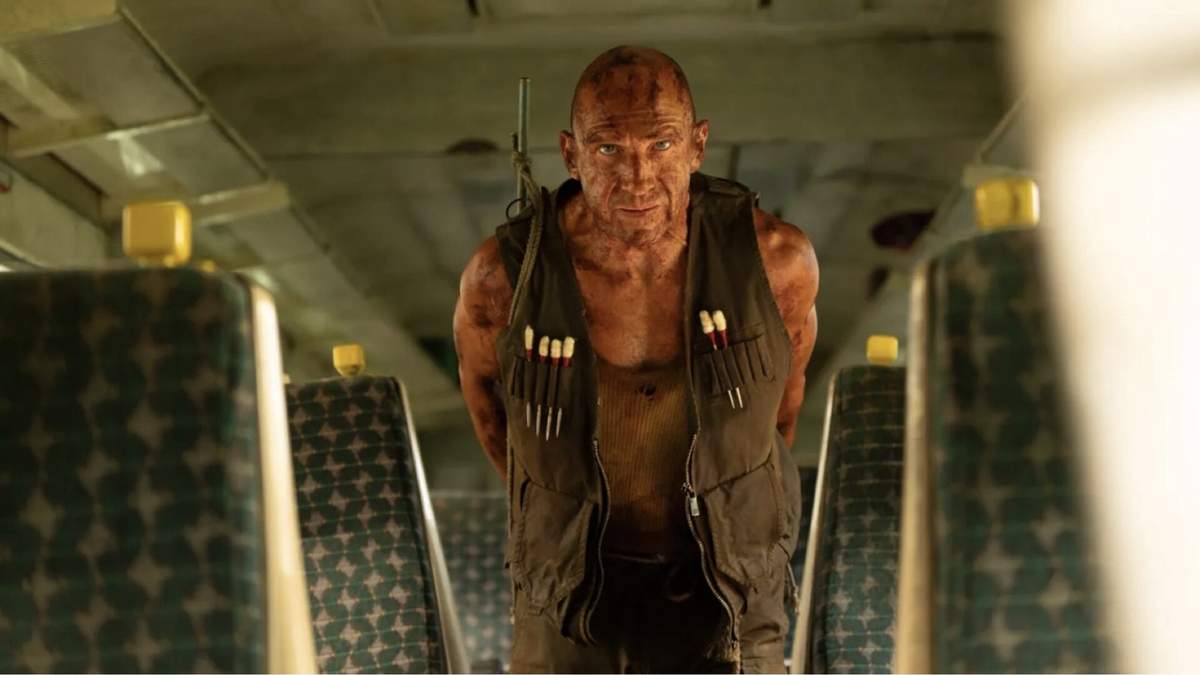
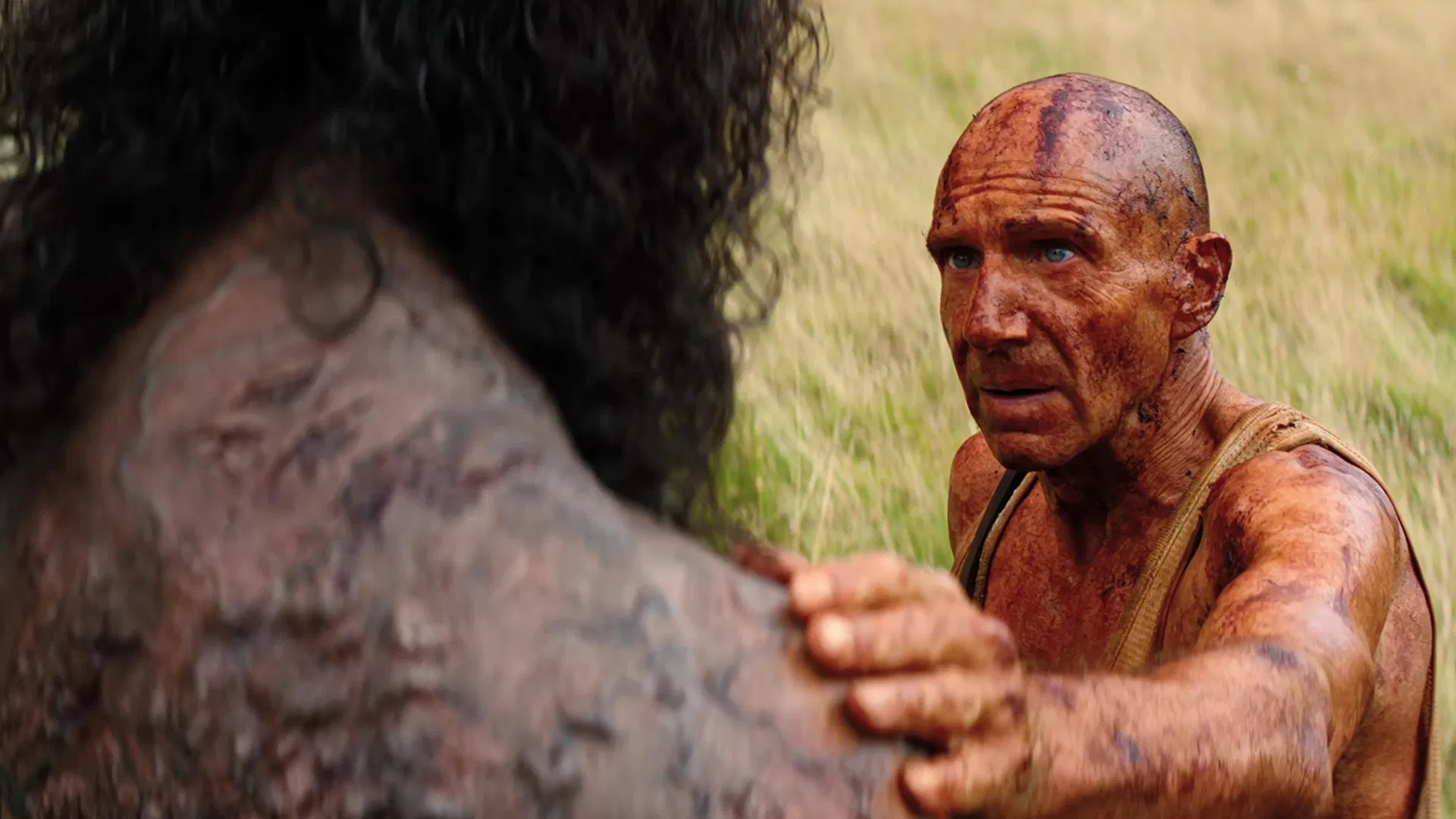
It even had the audiences applauding at a particular set of fiery sequences. This results in a closer inspection on the ever so graceful Ralph Fiennes’s character, Dr. Ian Kelson who continues to protect his bone temple of the dead, only to be joined by the menacing Alpha zombie (Chi Lewis-Parry), forming an unexpected alliance or even brotherhood of sorts, that feels the closest we ever got to seeing zombies and humans alike drawing a shared connection, affection even.
If you thought Ralph Fiennes was a standout in 28 Years Later, he carries over that commitment to greater heights and really cements the doctor as the franchise’s most compelling player who understands the turbulent nature of this post apocalyptic zombie Britain best yet, from delicious humor seeped in irony to a rare maturity, unlike so many leads of this genre, doesn’t seem to have the slightest care for killing and putting an end to this mass hysteria. Of course, it doesn’t go unnoticed how music plays an integral part in this film as Dr. Nelson is almost like the world’s DJ, collecting a bunch of records in his mini dungeon, allowing him to play on a lot of Duran Duran hits. There’s one sequence that really took my breath away as a defining franchise moment, demonstrating how music and horror combined can birth great storytelling.
As remarkable as Spike’s debut was in last year’s coming of age story focused on a father/mother and son relationship, he doesn’t quite get to benefit from such screentime and feels very peripheral at times. Largely due to juggling an ensemble cast and the clash of different narratives less interested in his presence. Jack O’Connell fares a lot better and takes on a captivating role in Jimmy, who is deeply rooted between satanic ideology and atheism as he grapples with his own place in the world, offering a smart contrast for Nelson to take advantage of and really showing DaCosta’s strengths as a duel perspective storyteller who thrives off wicked irony and a clash in ideas and faith.
Just like 28 Years Later, The Bone Temple similarly ends with an intriguing cliff-hanger styled tease set for Danny Boyle to take back control as the 3rd instalment of the trilogy has been confirmed. Nia DaCosta learns to find her own ways into this zombie horror franchise and leave her own mark, crafting a thrilling ride that feels like a spiritual awakening even if it doesn’t fully meet its potential. If 2026 was waiting for its first great film, though, The Bone Temple has quickly arrived with Ralph Fiennes and Jack O’Connell again stealing the spotlight in back-to-back years making this a must see watch in cinemas.
28 Years Later: The Bone Temple is directed by Nia DaCosta and stars Ralph Fiennes, Jack O’Connell, Alfie Williams, Erin Kellyman, Chi Lewis-Parry, Emma Laird, Louis Ashbourne Serkis, Maura Bird, Ghazi Al Ruffai, Sam Locke, and Cillian Murphy.
28 Years Later: The Bone Temple is out in theatres on January 16

Thanks for reading our 28 Years Later: The Bone Temple review. For more, stay tuned here at Feature First.